
Year In Review 2025
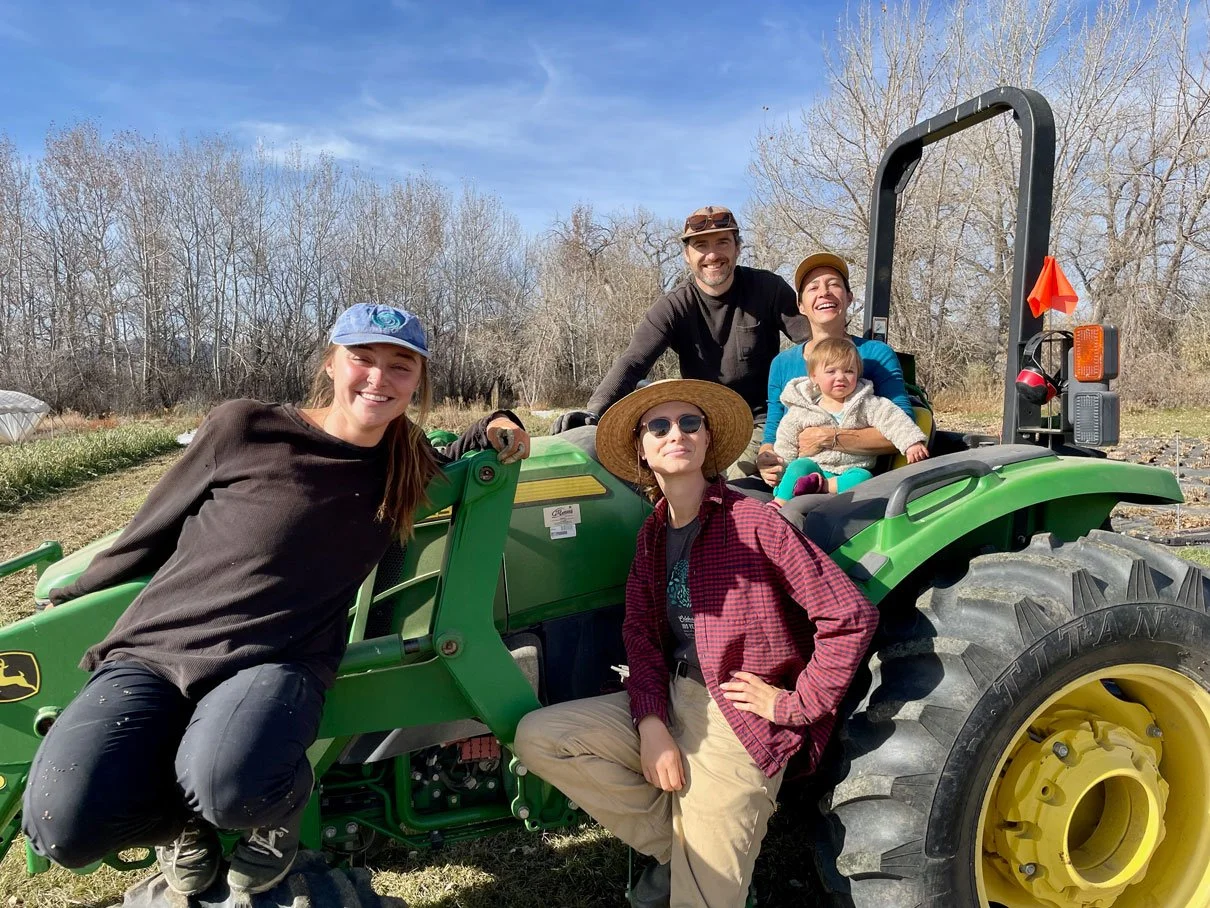
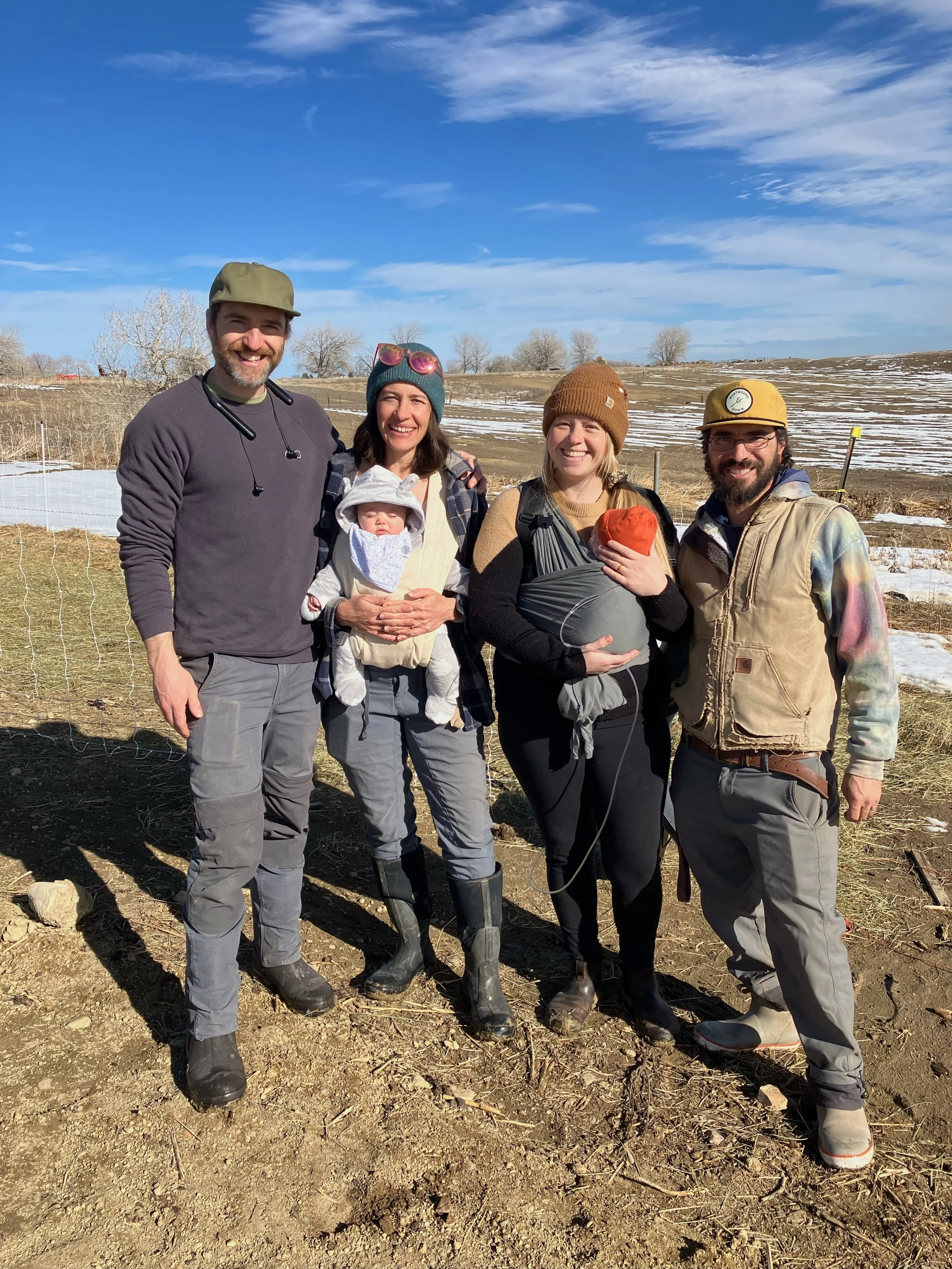
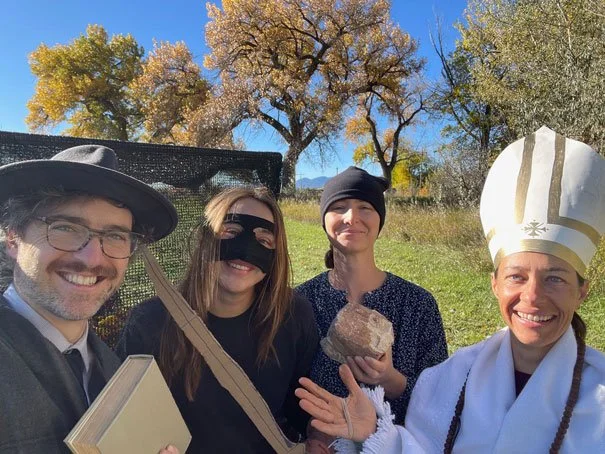
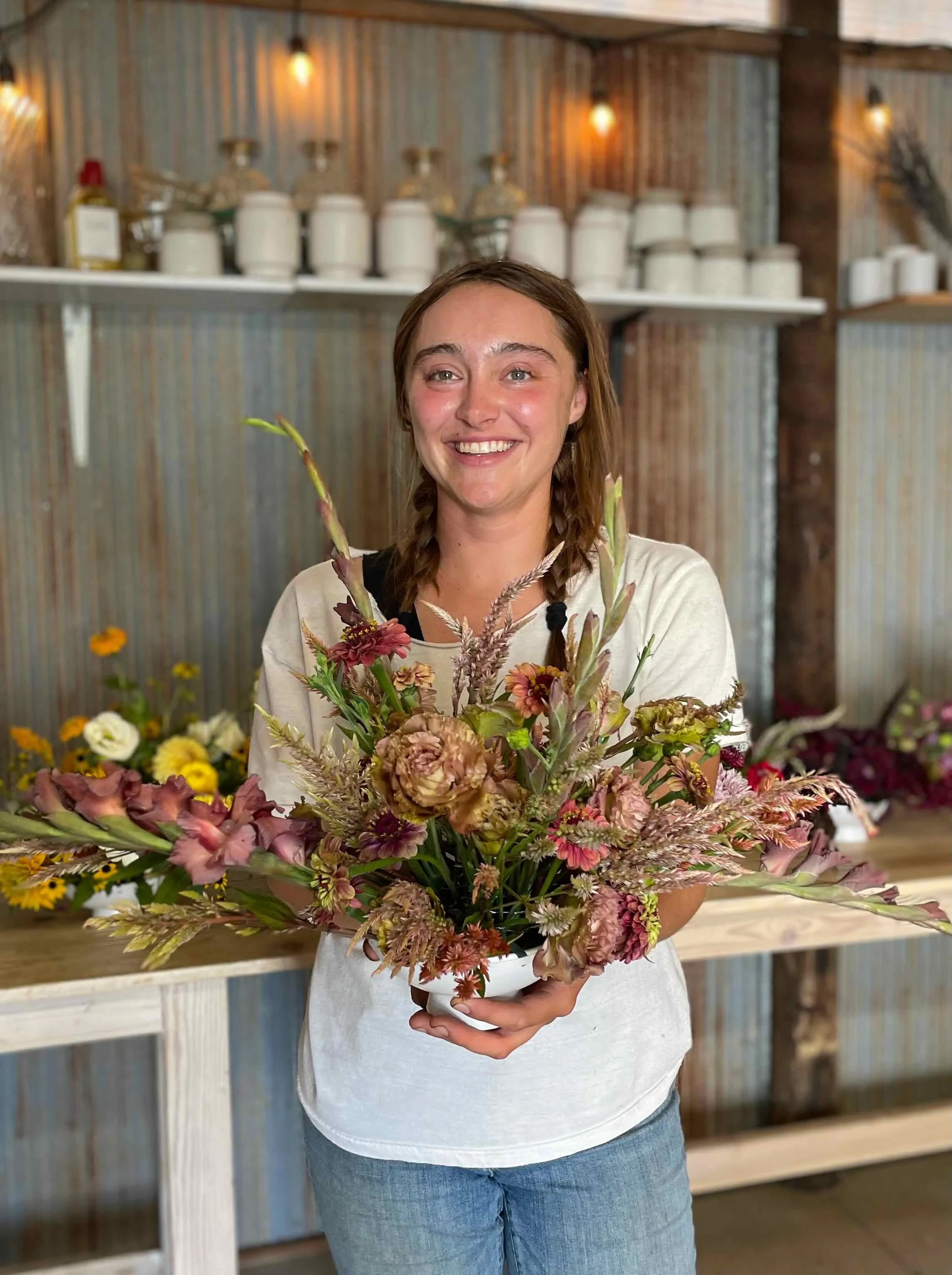
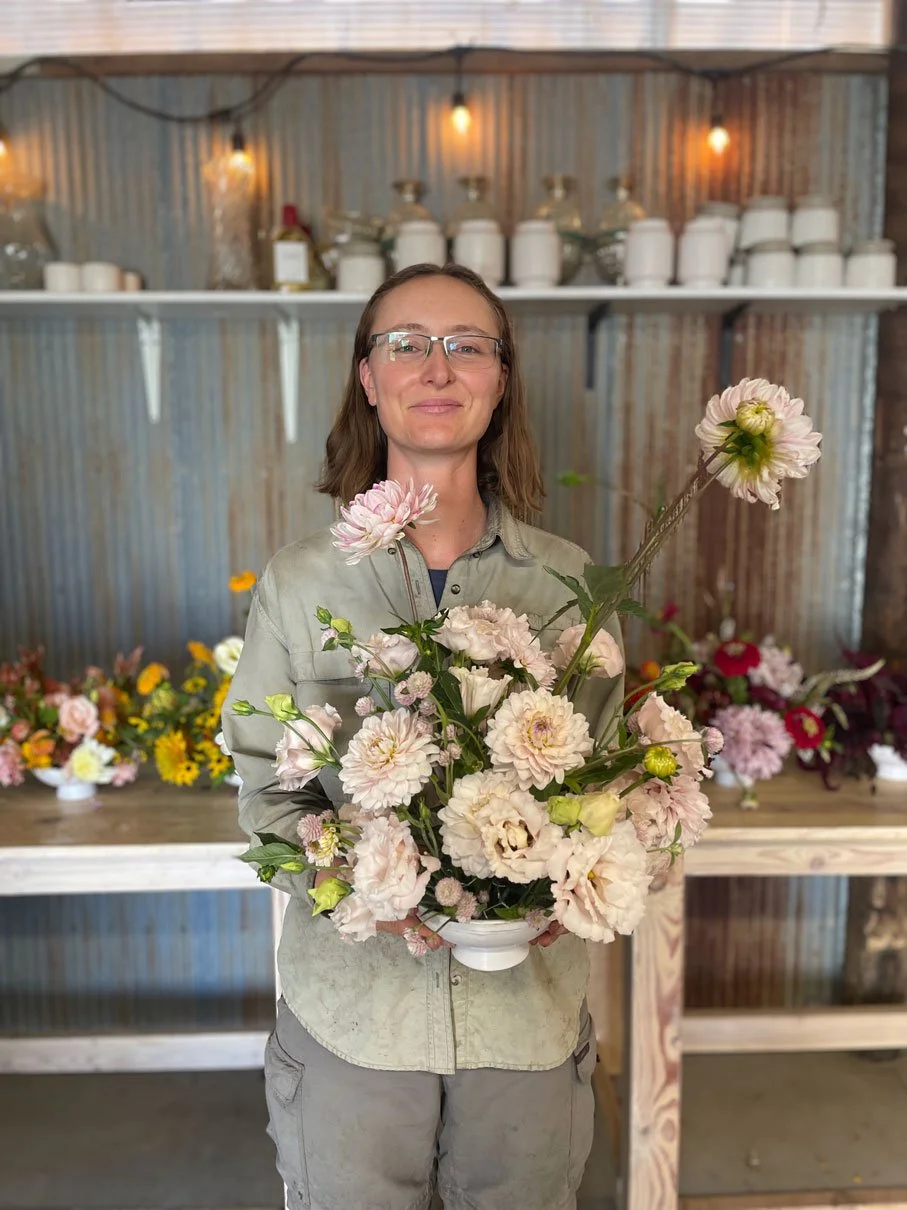
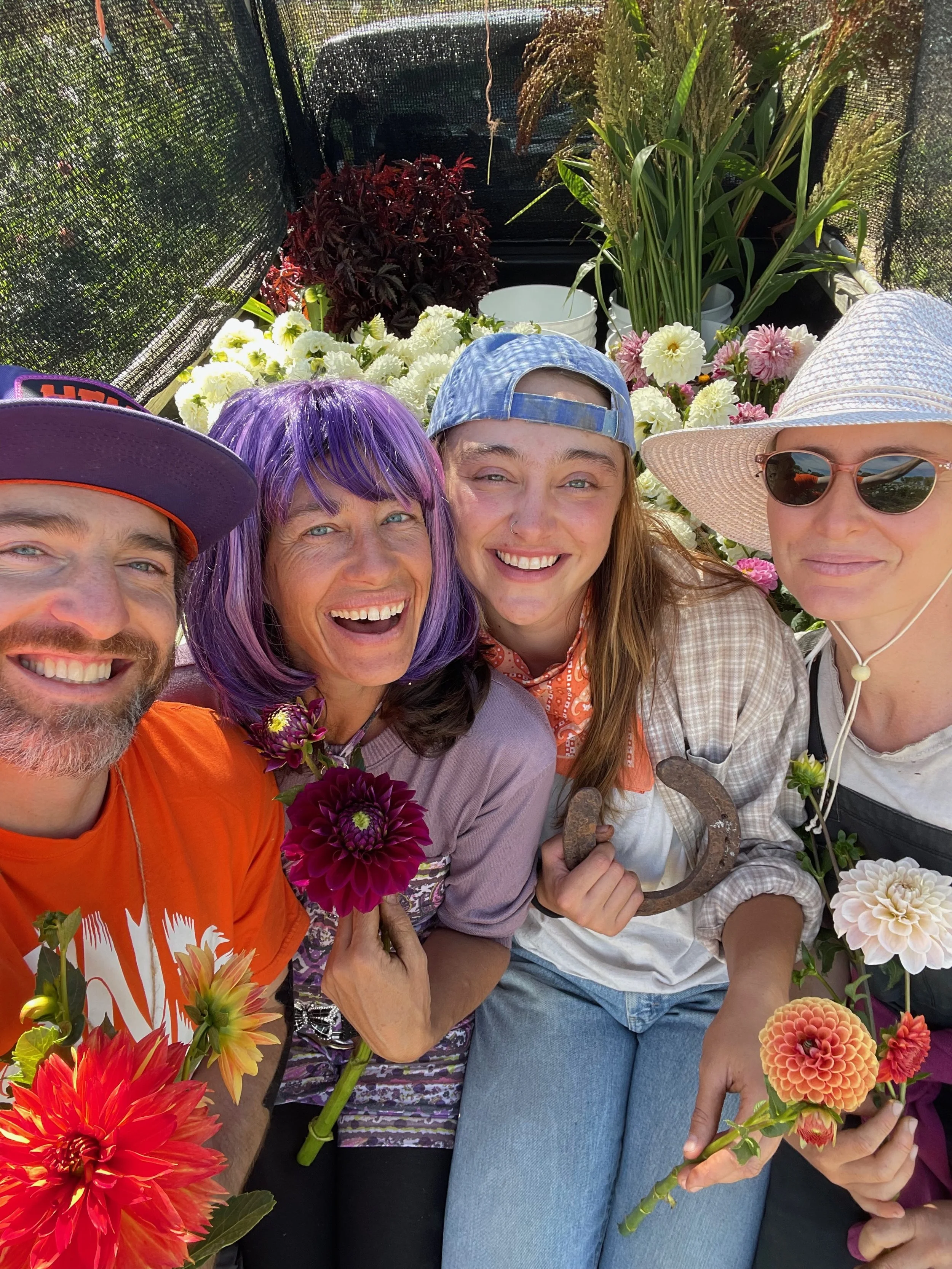
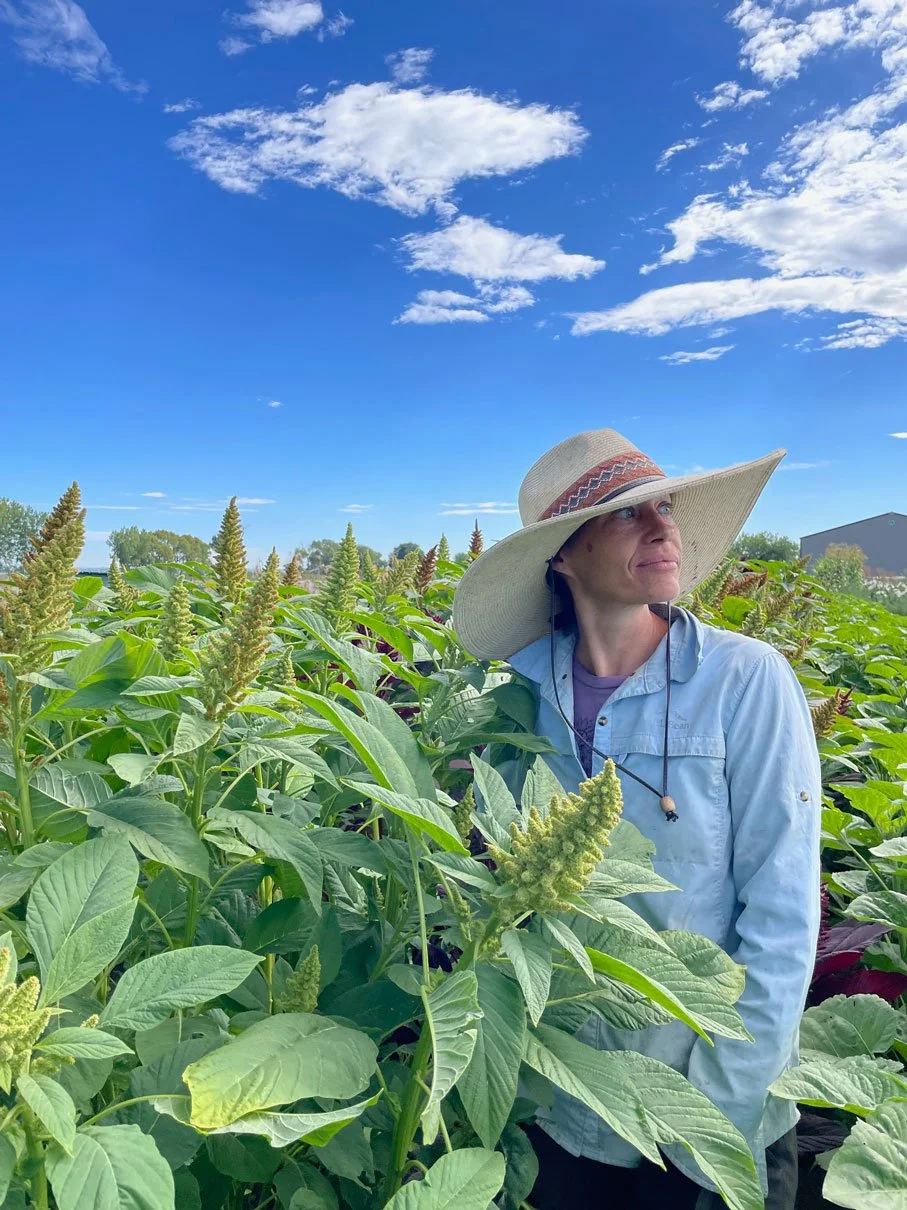
Left to right: Jane, Erin, Nelson, Helen, Margot
2025 was a year of big changes, and at times it felt like the growth and change was so fast it was cracking our bones.
Farming with a New Baby
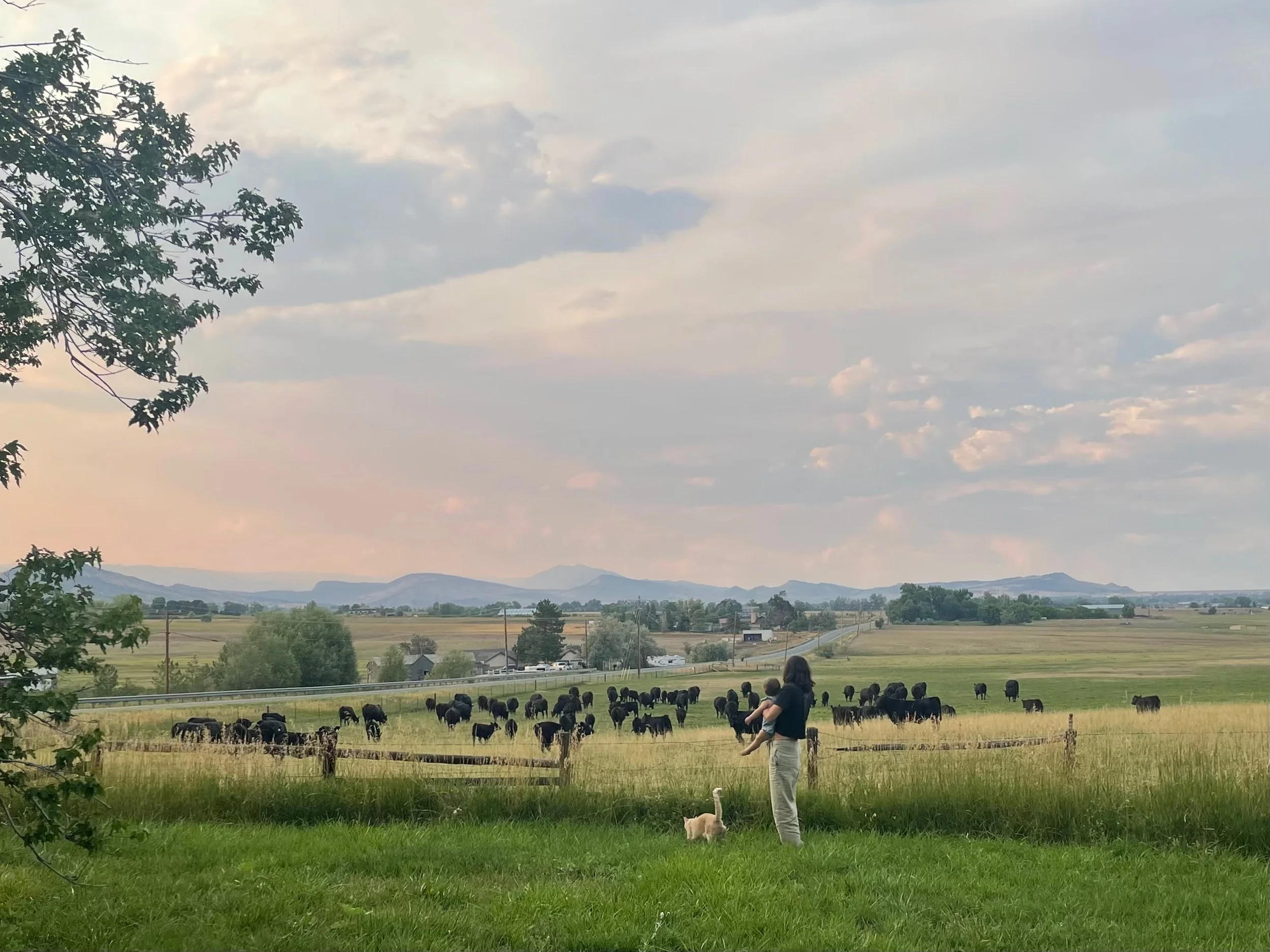
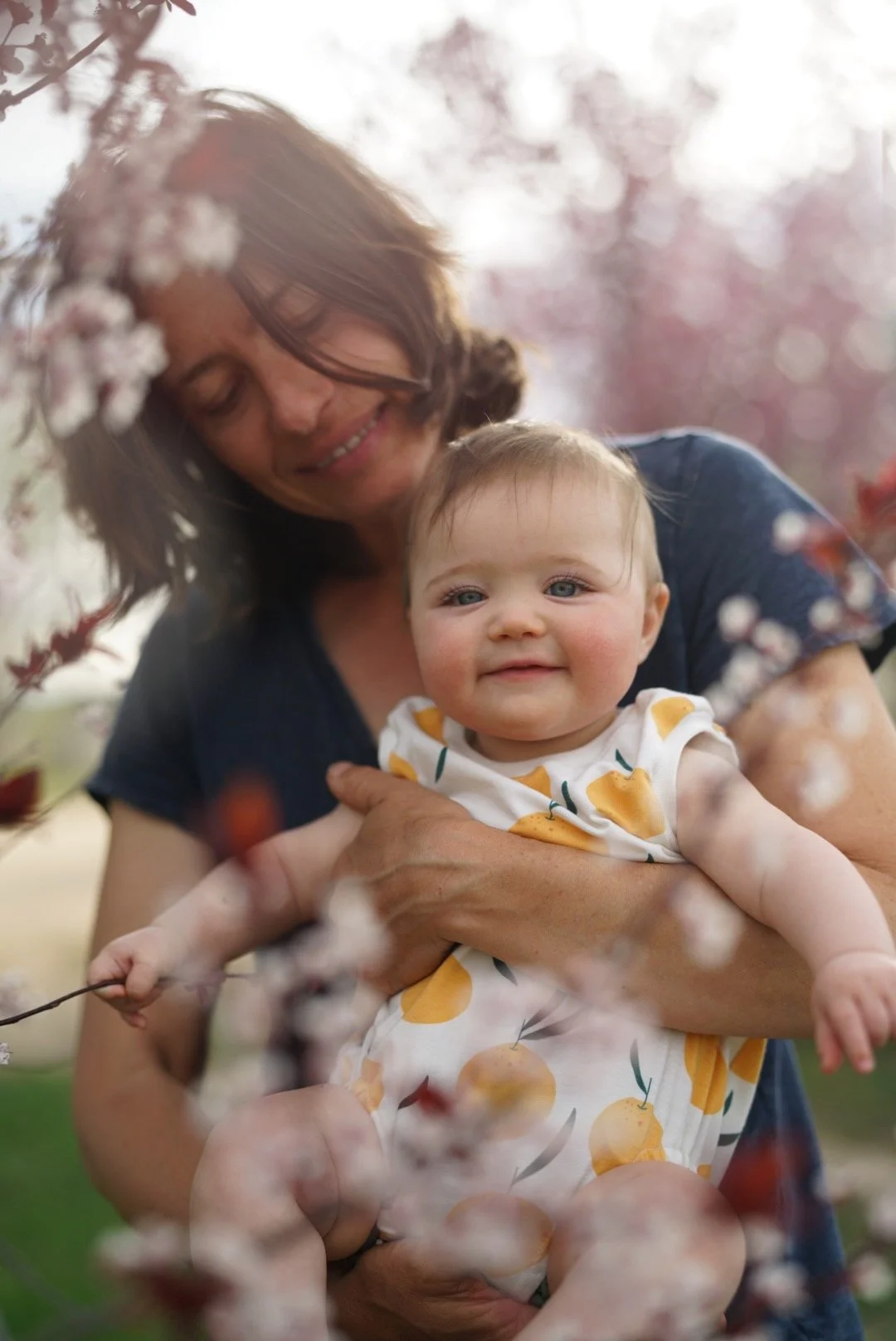
The biggest thing, of course, was that it was our first season with a baby. Margot Clementine arrived in August, 2024, after I spent a month in the hospital following some complications. Margot was 7 weeks early and spent about a month in the St. Luke’s NICU, getting breathing and feeding support. But she really had no complications otherwise, and came home on the day of the fall equinox. We spent the winter getting to know her, and ourselves as parents, while trying to get all our ducks in a row for the new farm season.
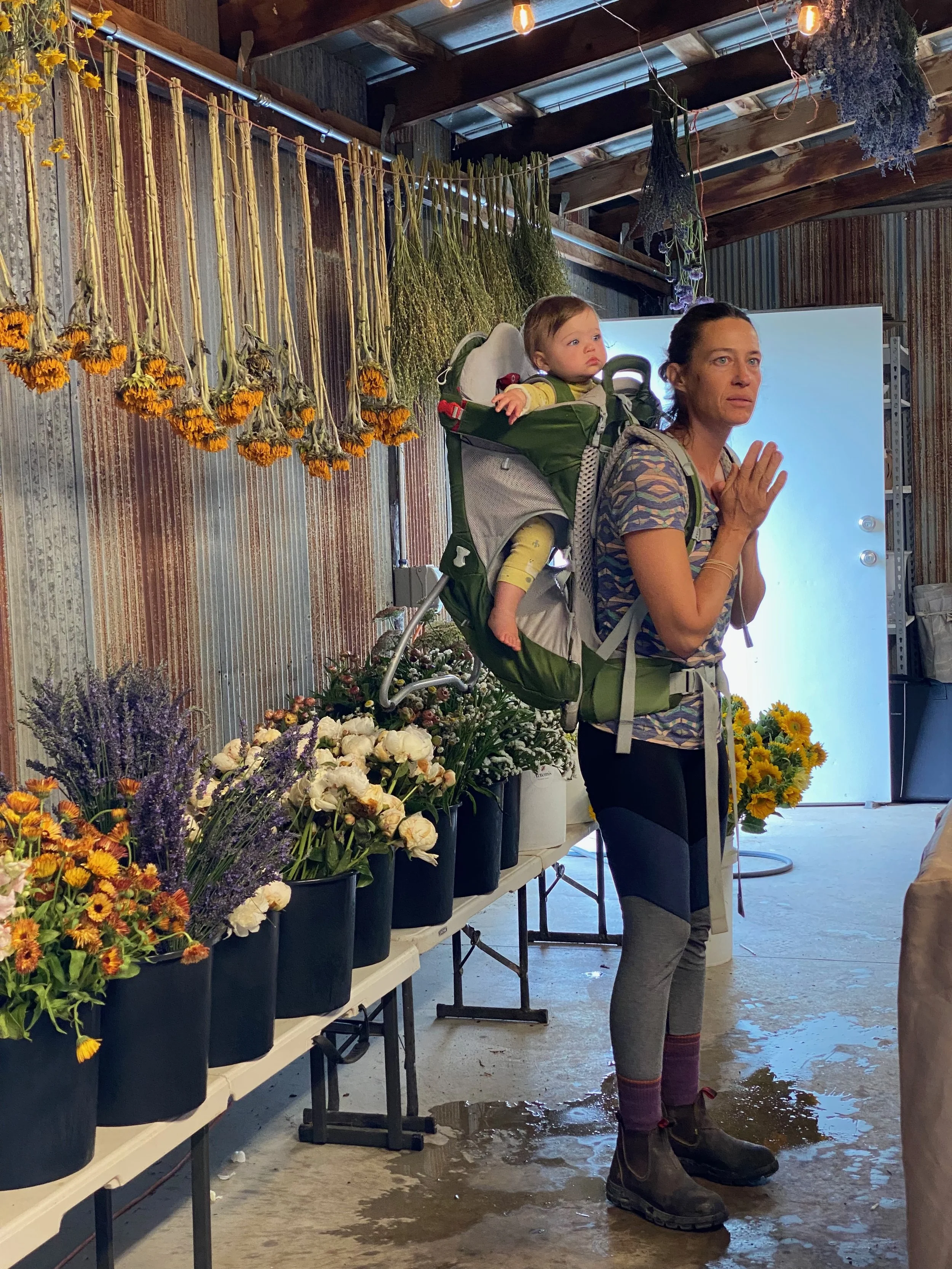
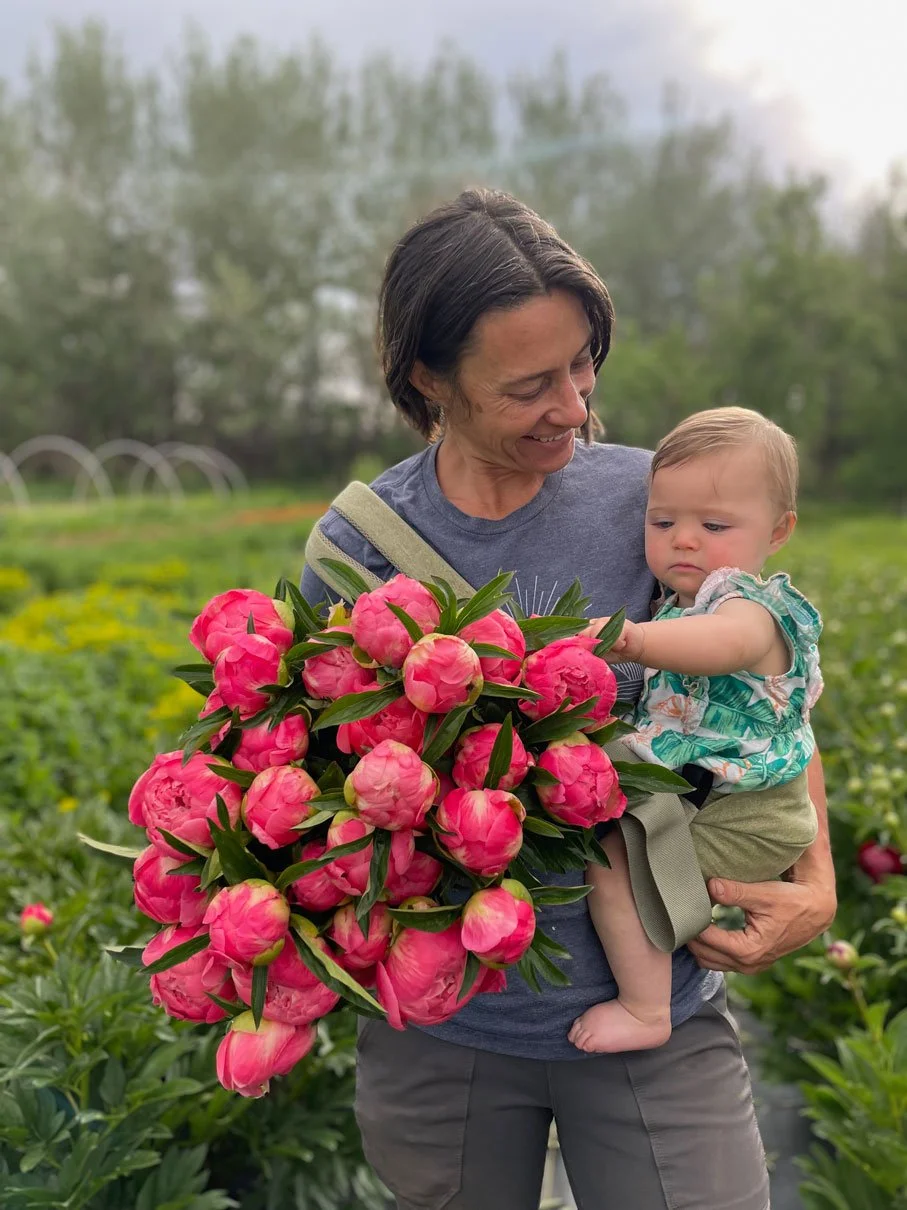
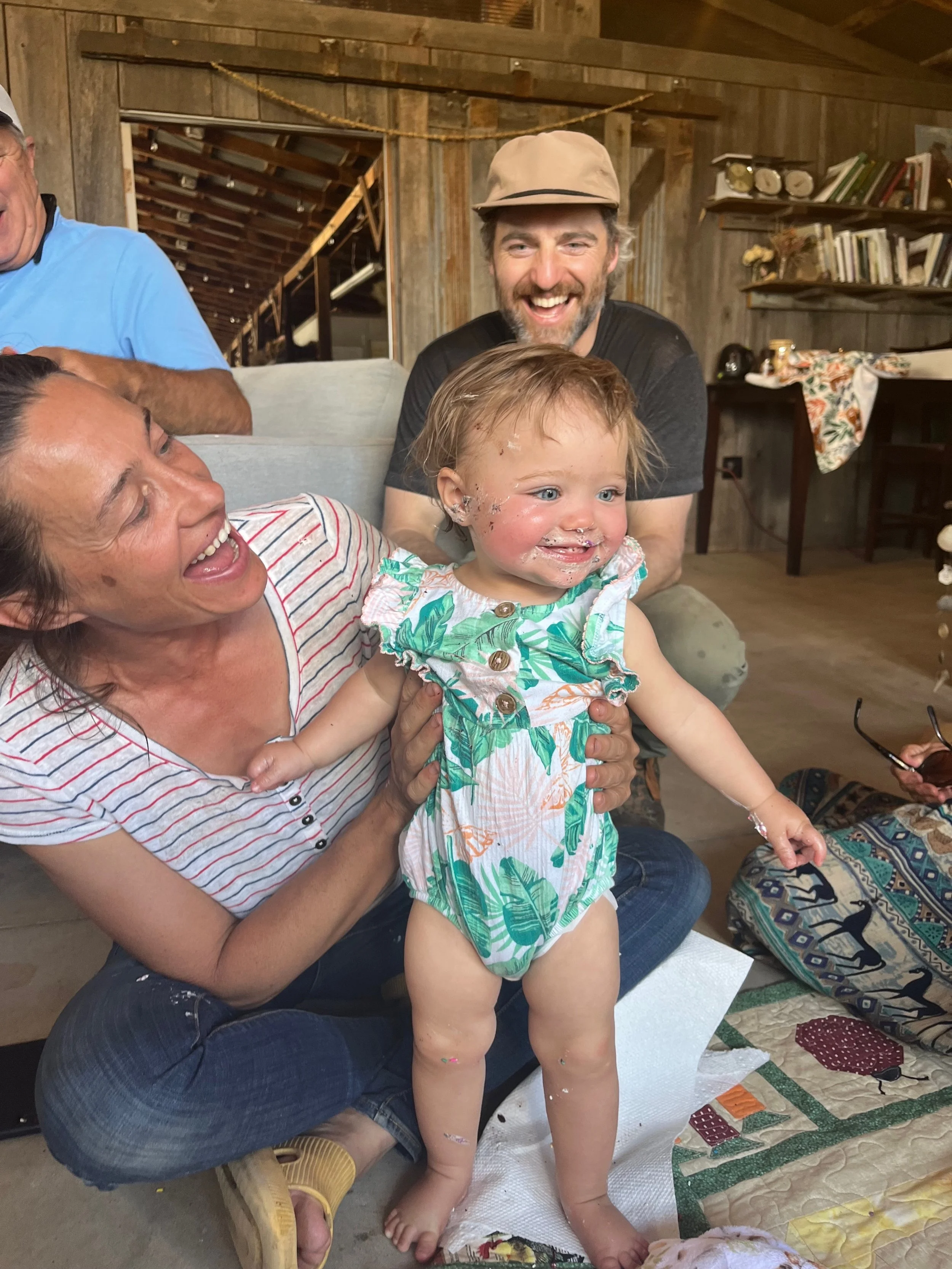
It’s been joyful with her here. It’s also been a true reckoning — with our work lives and the demands the farm places on us, with the time required to care for a very small human being, and with everything we received from our own mothers. When she was small (in the “potato” stage) it was easy to get things done, like our dahlia tuber divide and season planning. But as she grew and started moving and crawling, standing and walking, the demands on our attention have increased dramatically. Some folks are able to keep farming with their babies on their backs or attached to their hip, but we found that we couldn’t concentrate on our work, so one or the other of us stayed with Margot while the other worked. Nelson became the default childcare provider, as I continued to manage the farm and the team. We cobbled together about 12 hours of childcare per week with the help of our generous parents, which got us through the height of the season.
But sleep continues to be an issue, and there is nothing in the world that hurts as much as working through a hard farming season when your brain and body need rest and you simply can’t get it. Sleep deprivation is torture, period.
More Farm Babies!
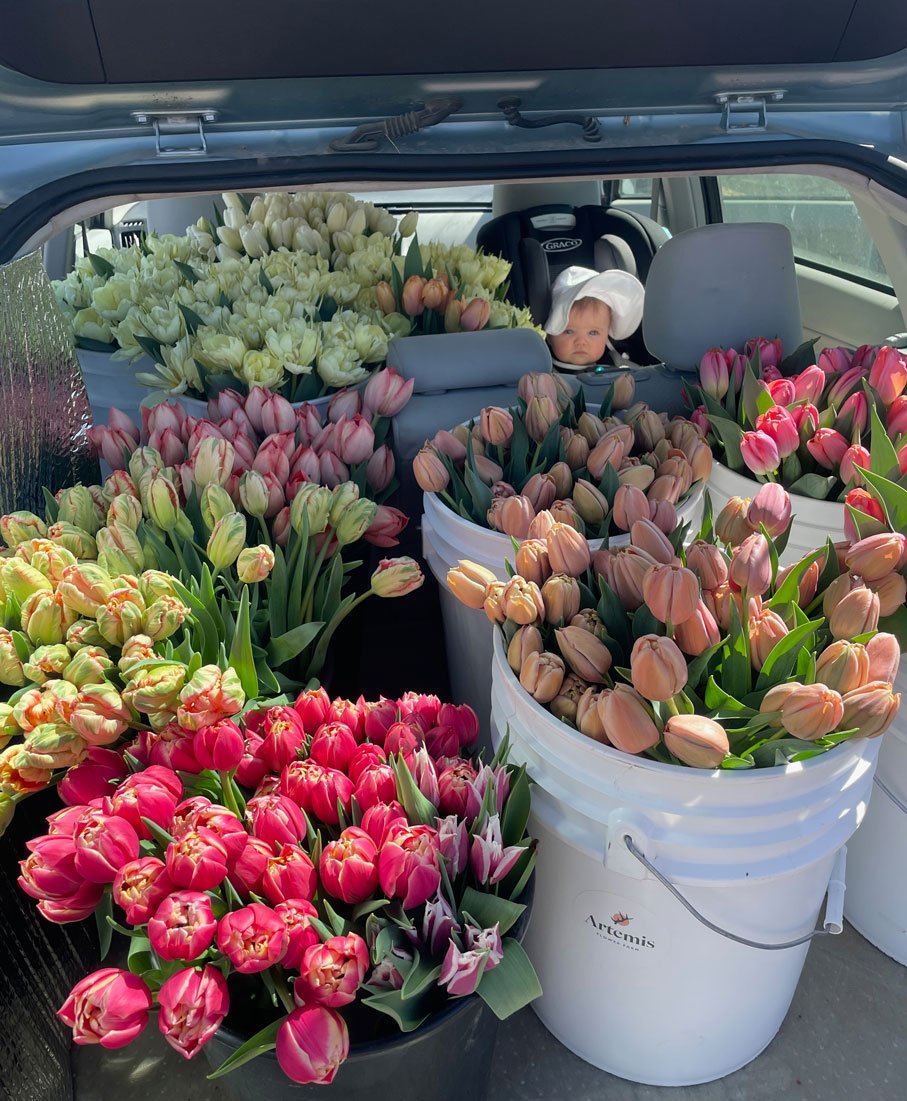
Incredibly, many of our farming friends had babies around the same time: Margot was preceded by Caitlin and Freddie’s boy Robin, at Labyrinth Dairy, who is now almost 2 and an incredibly fun dude; after that came the twins, Tamsin and Rossi at Rough & Ready Farm, and then the amazing Ramona, Cody & Mel’s spunky baby girl. Growing up with Ramona on the farm has been such a delight, and becoming a mother with Mel has been the best support system I could have had. In January, Colt was born to Kris and Becca at Lazy Acres, and Viggo arrived for Danny & Annaliese at Bluebird Sky in October 2025. It’s been a wild ride to see so many farmers become parents, and to see how amazing it is for babies and kids to be out in the world on the farm, eating dirt, collecting rocks and bugs and marveling at our impossibly beautiful universe.
First photo with Ramona and Margot!
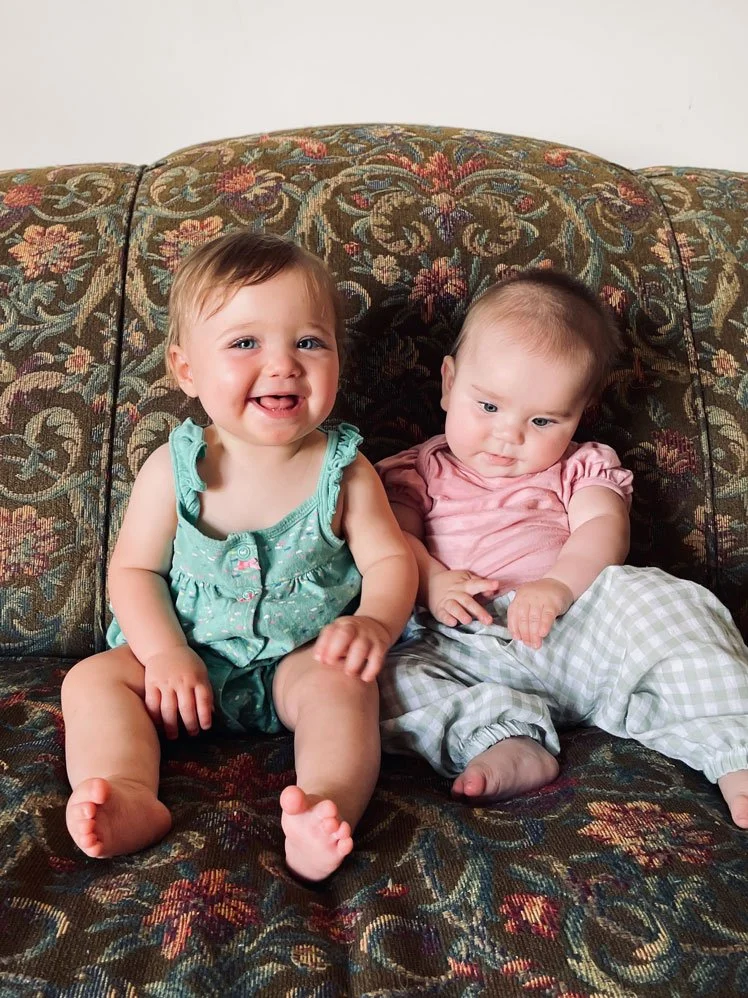
Margot & Ramona
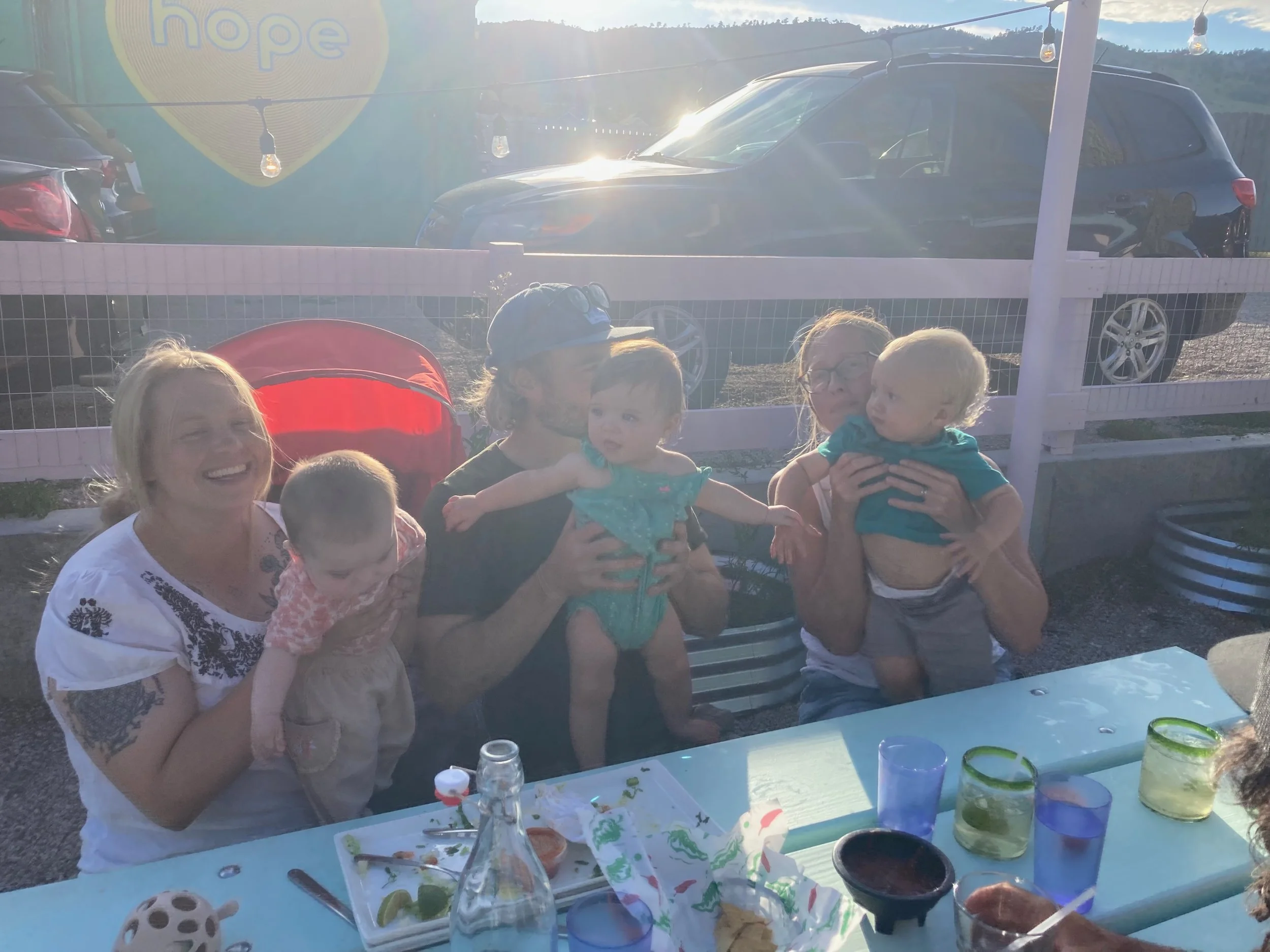
Mel & Ramona, Nelson & Margot, and Caitlin & Robin at the taco joint. Sorry for the bad pic but I think it’s cute.
Wonderful New Employees
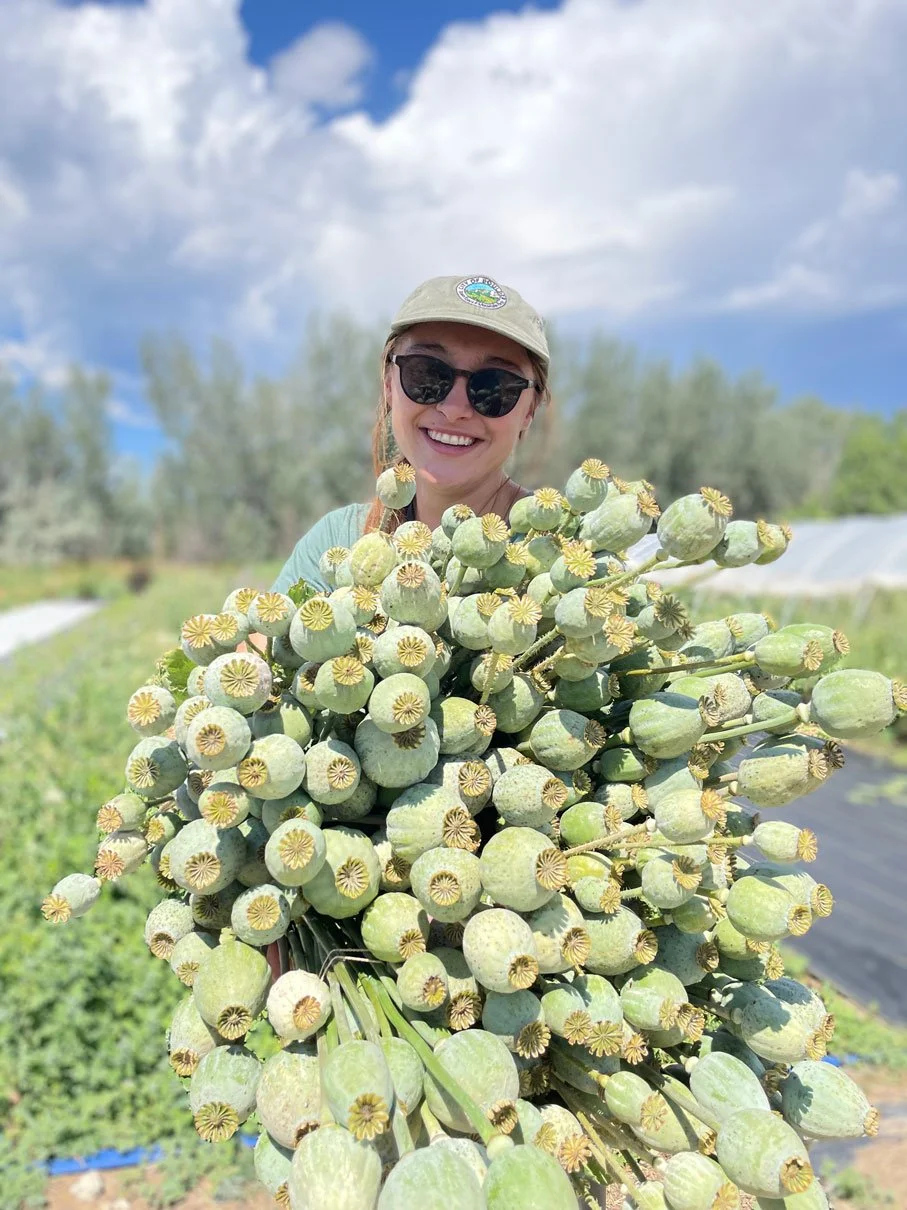
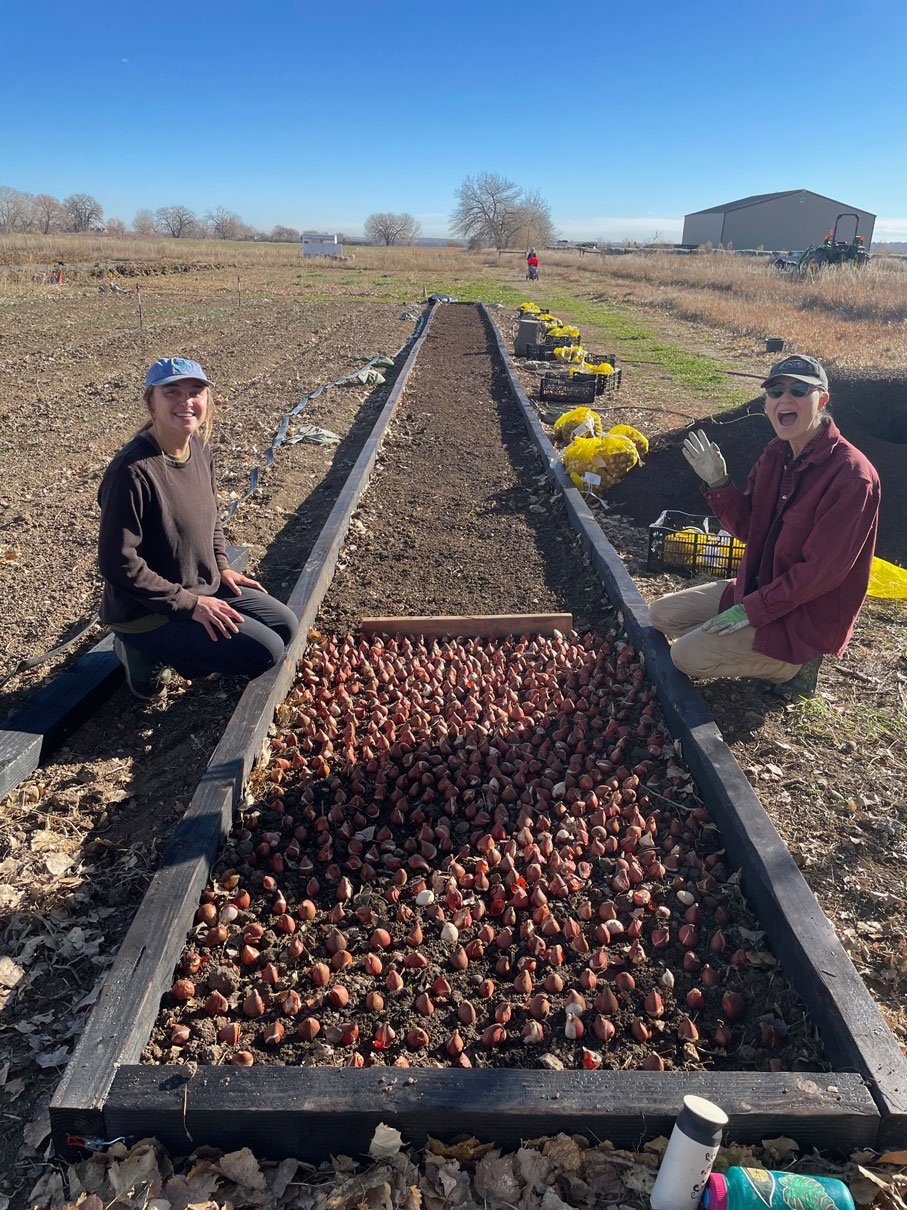
This year we welcomed two new employees to the farm, and they were incredible, indispensable, and revelatory. After losing our long-time employee at the end of 2024, it was a big change to train two new people who had minimal flower experience, but I was finally able to put some of my employment goals into practice, like creating a real employee handbook, refining our Standard Operating Procedures (SOPs) and putting more boundaries around our family life to separate it from the farm. We also started “coffee talk” sessions where we gave Jane & Erin a mini-lecture about some aspect of the farm or our knowledge. Later in the season, we all participated in mini “mastermind” sessions where we set out to talk about and solve a problem on the farm, or make a process more efficient, or just talk through a hypothetical scenario for the business.
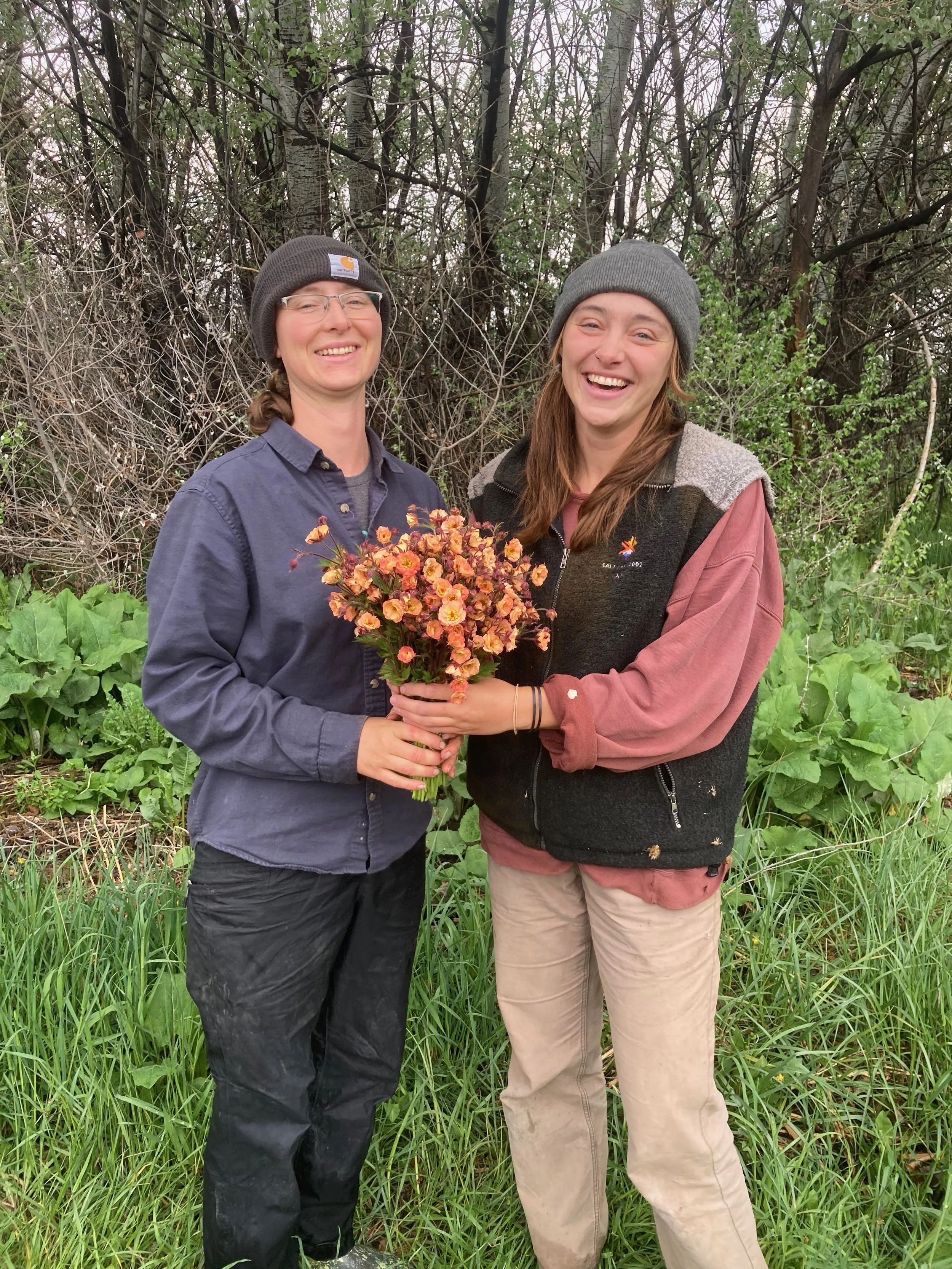
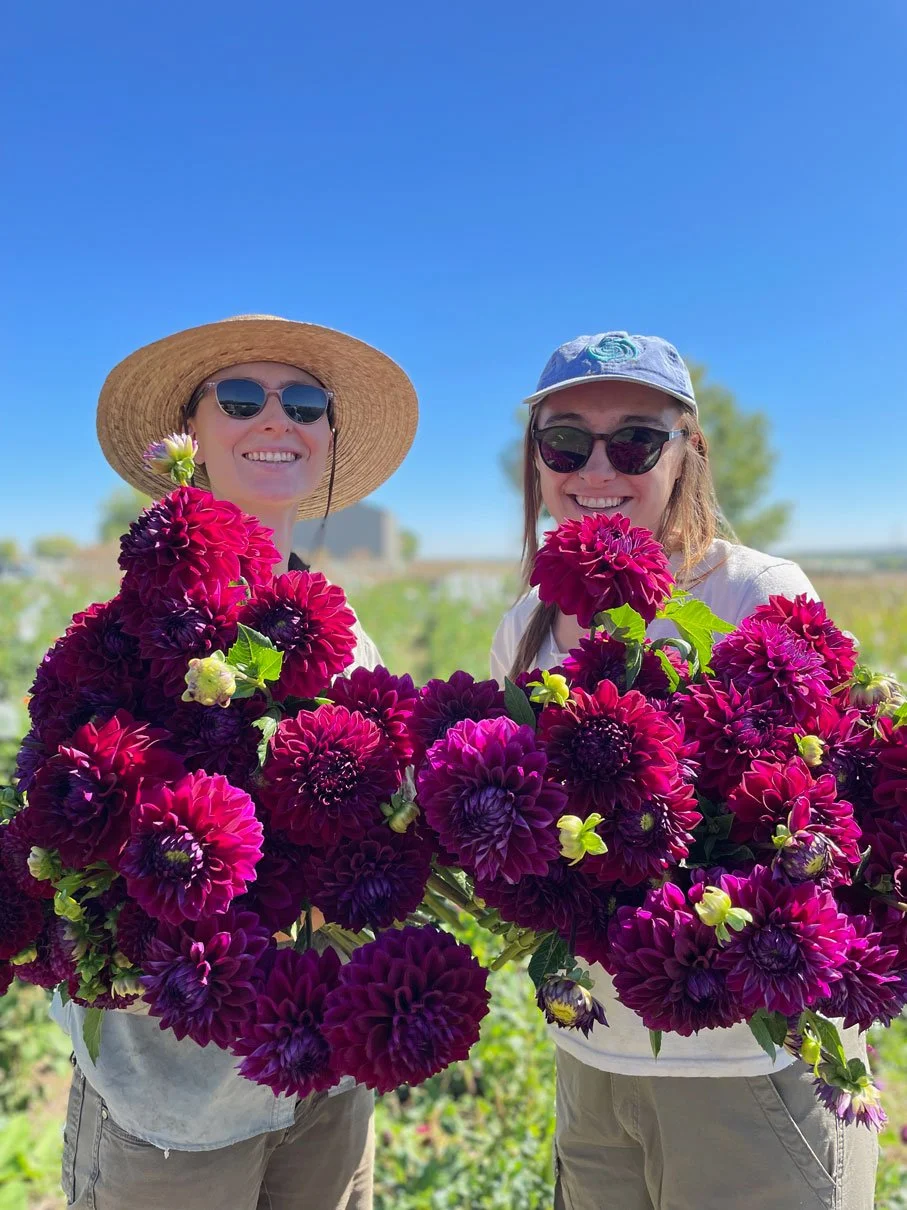
Erin and Jane brought lots of new energy, enthusiasm, and joy to the farm, from great ideas about how to improve our farm stand, to weekly costume challenges leading up to Halloween (one week, we all dressed as our favorite dahlia, and for another we chose our favorite character from The Princess Bride!), to just generally accepting my mom brain and lack of sleep and supporting me through all of that. I don’t know what would have happened to our business if we’d had employees of even slightly lower caliber: these two are BOSS! I’m so happy to be welcoming them back for the 2026 season, and to be adding a third person to our team. If you’re interested in working with us, the application is here!
Tractoring!
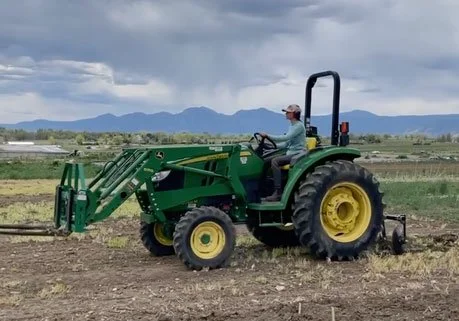
The JD 4066M in spring
This was our first full season with a tractor, which we were able to purchase thanks to Boulder County’s sustainability tax, which funds the Soil Health Initiative grant program. We’ve learned a lot about running and maintaining the machine, and what it can and can’t do, but already it’s been a huge time and labor-saver for us and the Collective. I think it would have been worth it just for the forks to lift silage tarps and sandbags; in the past, we literally dragged our silage tarps from field to field with a rope attached to our pick up truck, and moved sandbags one at a time into the truck bed and out again.
Along with the tractor we bought a power harrow, an undercutter/bed lifter, a flail mower, a compost spreader, and a toolbar with furrowing shanks and discs for making beds and digging trenches for dahlias.
What I would change about our purchases in hindsight:
I think we chose the right tractor. It’s a John Deere 4066M, which is a 65-horsepower tractor and the biggest “compact” tractor they make, and we got one with 13” rear tires, which fit into our aisles. My goal was to find something that could be a Swiss Army knife, with tons of capability and uses, from lifting and heavy tillage to fine cultivation, and that would fit into our established systems. It also came with an augur, which is cool for planting shrubs & trees.
We didn’t need the hydraulic side-shift mower, just a fixed one, and I could have put that extra money towards other implements.
We could have bought a higher-quality power harrow. I’m still figuring this one out, and it definitely needs primary tillage and the right soil moisture to work properly. It’s an Ibex brand 48”-wide harrow with 7 rotors. When things are perfect, it’s perfect — but things are very rarely perfect! I have my eye on the Maschio brands, but they’re hard to find and expensive.
We could have bought a ripper/subsoiler. This would have met our need for primary tillage and helped us with a lot of the compaction we deal with on this farm that happened because of the feedlot operation that existed before our landlords bought it. As it was, we were able to borrow one from the wonderful Off-Beet Farm, but that came with its own problems (see details in the “Comic Relief” below!) If not a subsoiler, we need some kind of primary tillage implement — I’m looking into disc harrows — but I question whether a disc will work on our crazy clay.
After doing more soil testing and consulting, this time with John Brown of Brown’s Farm, we learned that we really shouldn’t be adding more compost to our soils because of our sky-high phosphorus levels. Which means we have a very expensive compost spreader that we might not be able to use at all, or certainly not to the extent that would justify its purchase. So I’m brainstorming ideas for what to do :)
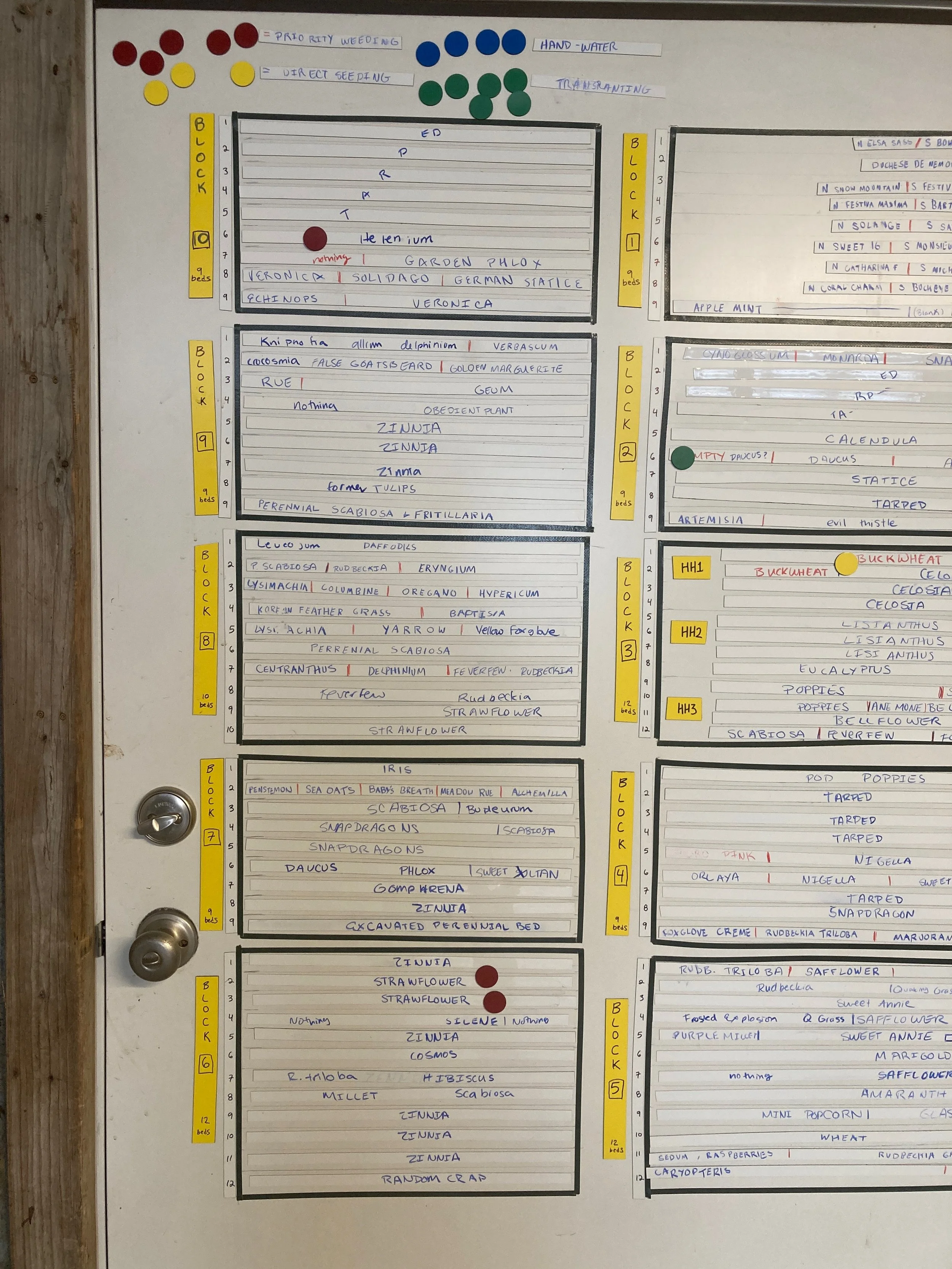
A huge caveat about the tractor is that we set up our farm in part to be scaled for hand tools, and now we’re seeing the consequences. I made a mistake in planting shrubs at the end of each bed, an attempt to make microclimates and habitats, but all I did was make our main field much less efficient, and instead of being able to drive over the beds with the tractor, we’ve had to back up into the beds to use implements, which is really just a huge pain in the butt. So now we have another project on the plate for 2026, which is moving all the shrubs into their own beds. Yikes. At least we have a tractor with an augur to help!
Van Life
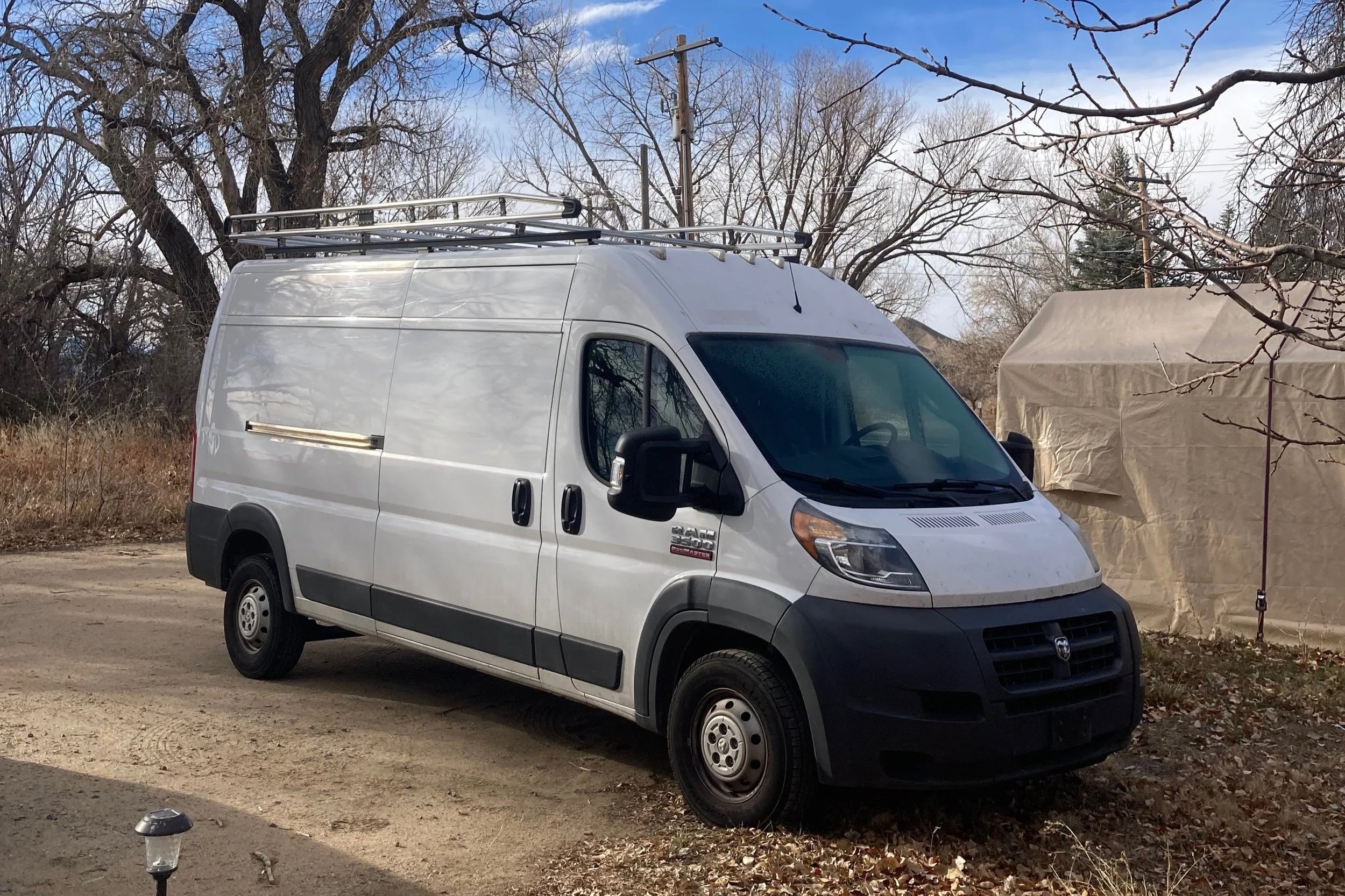
New van January 1, 2025
At the end of 2024 we bought a much bigger van, and we’ve been able to haul way more flowers to the Collective and to the 3 dates we did at the City Park Farmers Market, without cramming them in and breaking stems, and without feeling like the van was going to break down if we headed up just one more hill. It was a big investment, but it definitely has paid off. I did hurt the van pretty badly this year!
Production Numbers
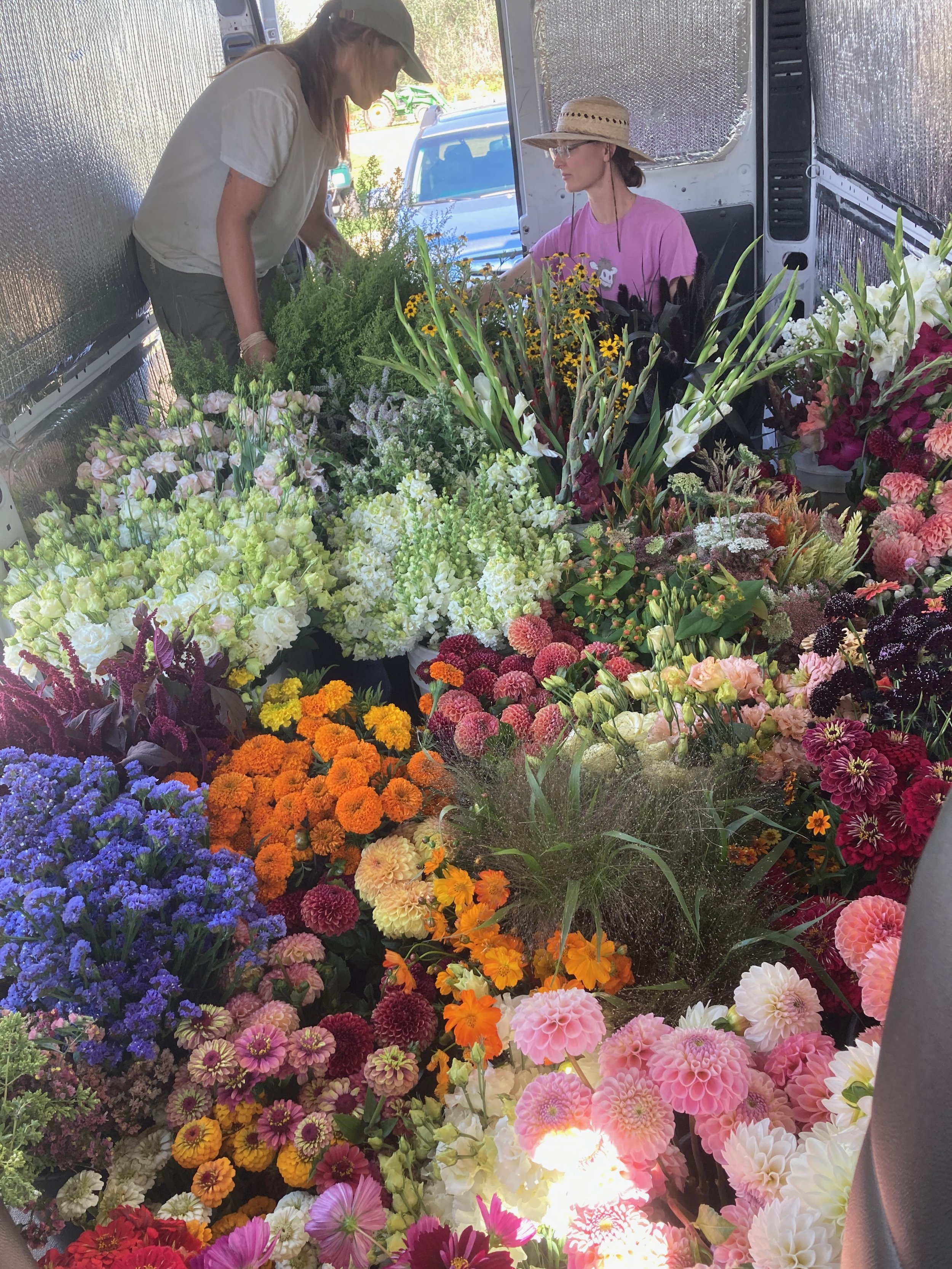
Jane & Erin filling the last space in the van, September
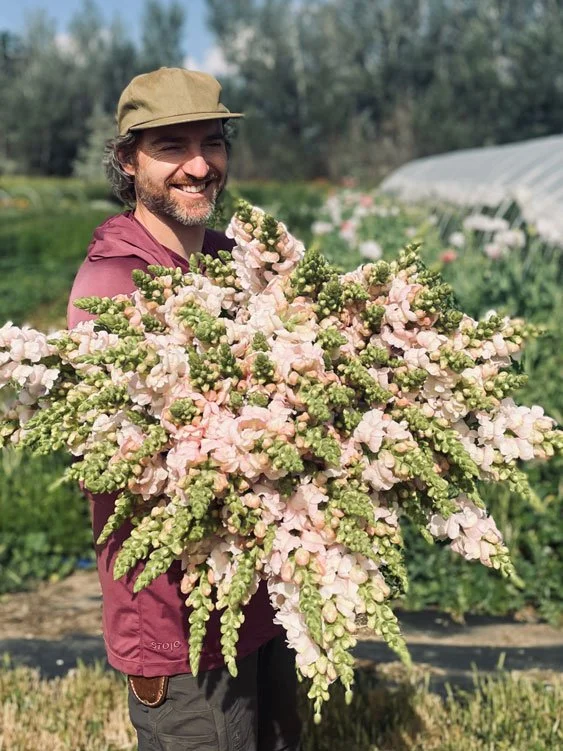
This year our production of stems plateaued: we harvested 179,141 stems, just a 3% increase over last year. I believe we would have had a much bigger year, maybe reaching 200k stems, but we had some big issues with weeds, and we lost quite a few crops that would have otherwise given us bigger numbers. We also had some bad germination issues with our sunflowers, which is making me consider paperpot transplanting or soil blocks for them in 2026. This would add a significant amount of labor to our sunflower production, but it might be the only way to stay ahead of the mice and birds. If the weeds and pests had been similar to 2024, I do believe we would have had a bigger production year. But I’m not mad about it. I think we did an amazing job of harvesting everything that was ready out there and getting it sold in time. We definitely had a lot of “shrink” in some crops — we grew too many zinnias, we didn’t sell our snapdragons fast enough, and with so many dahlias it’s almost impossible to get them all out the door — but we did really well considering our reduced work hours and attention span what with the baby. I’m proud of us!
Here are our top 10 crops by stems produced for 2024 and 2025:
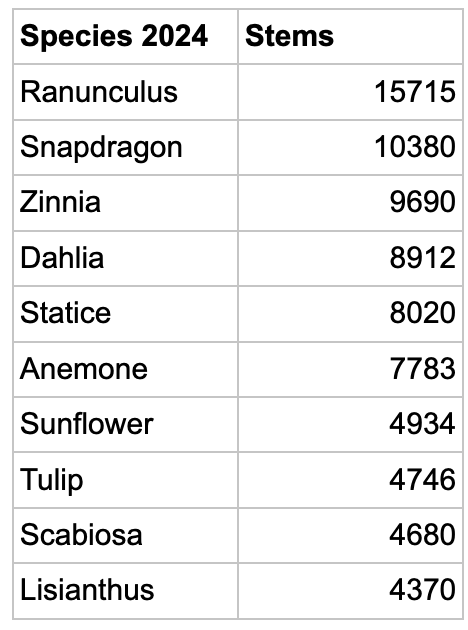
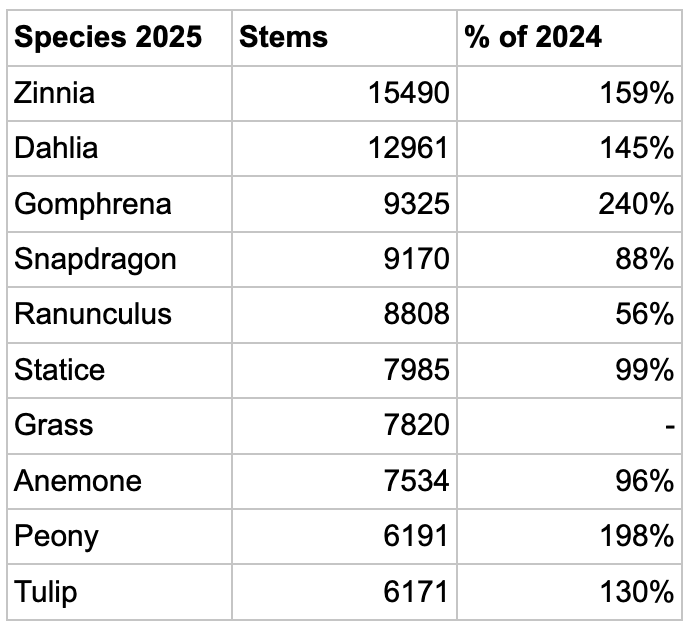
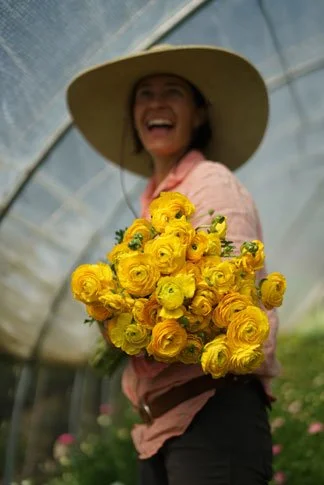
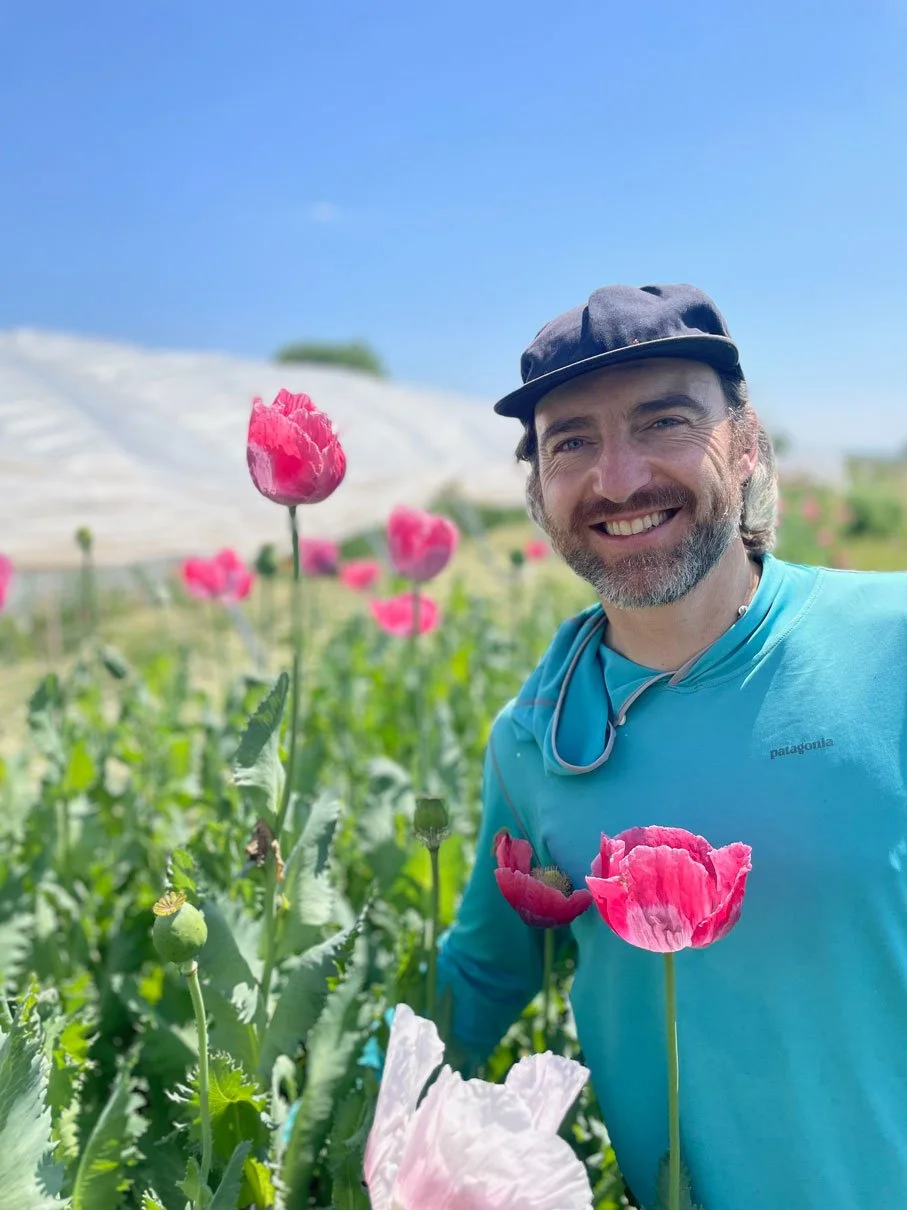
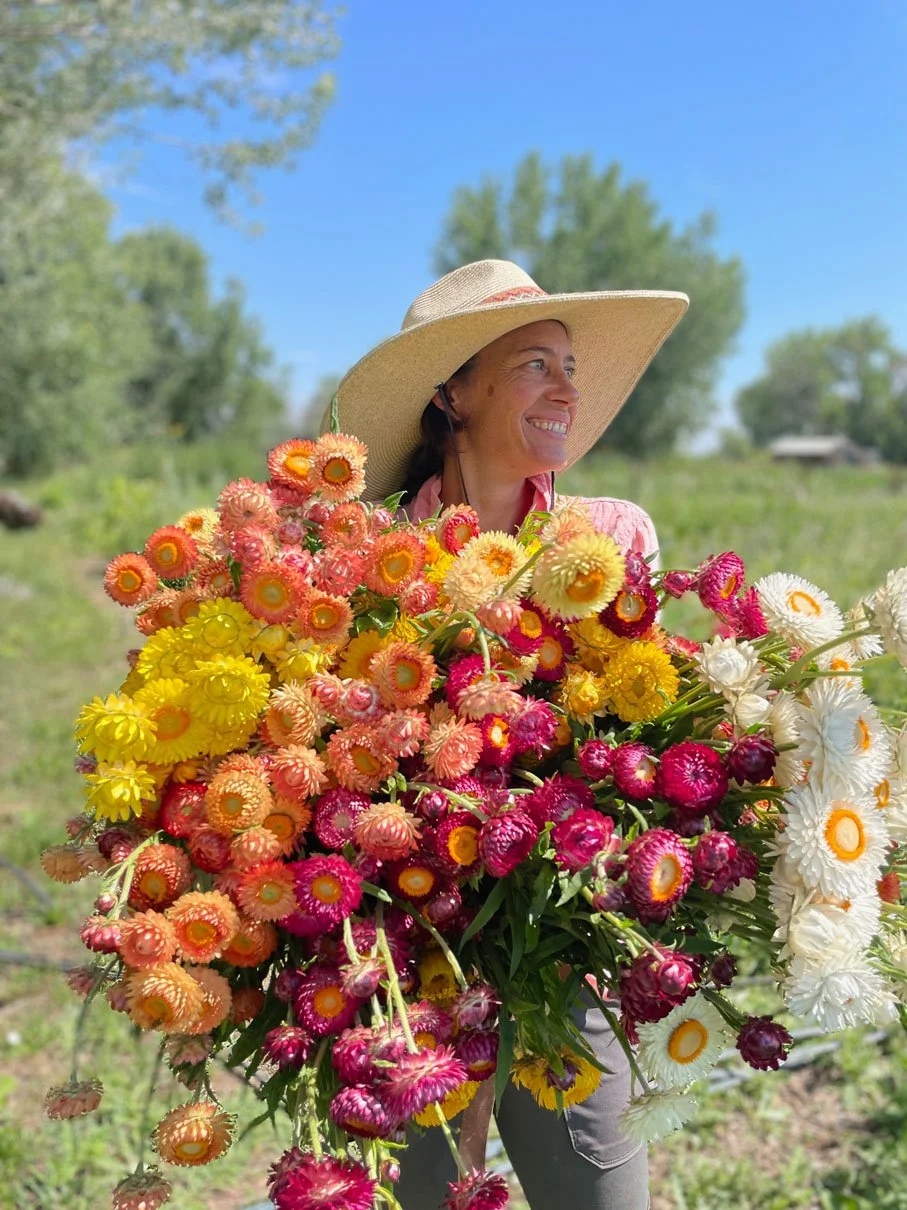
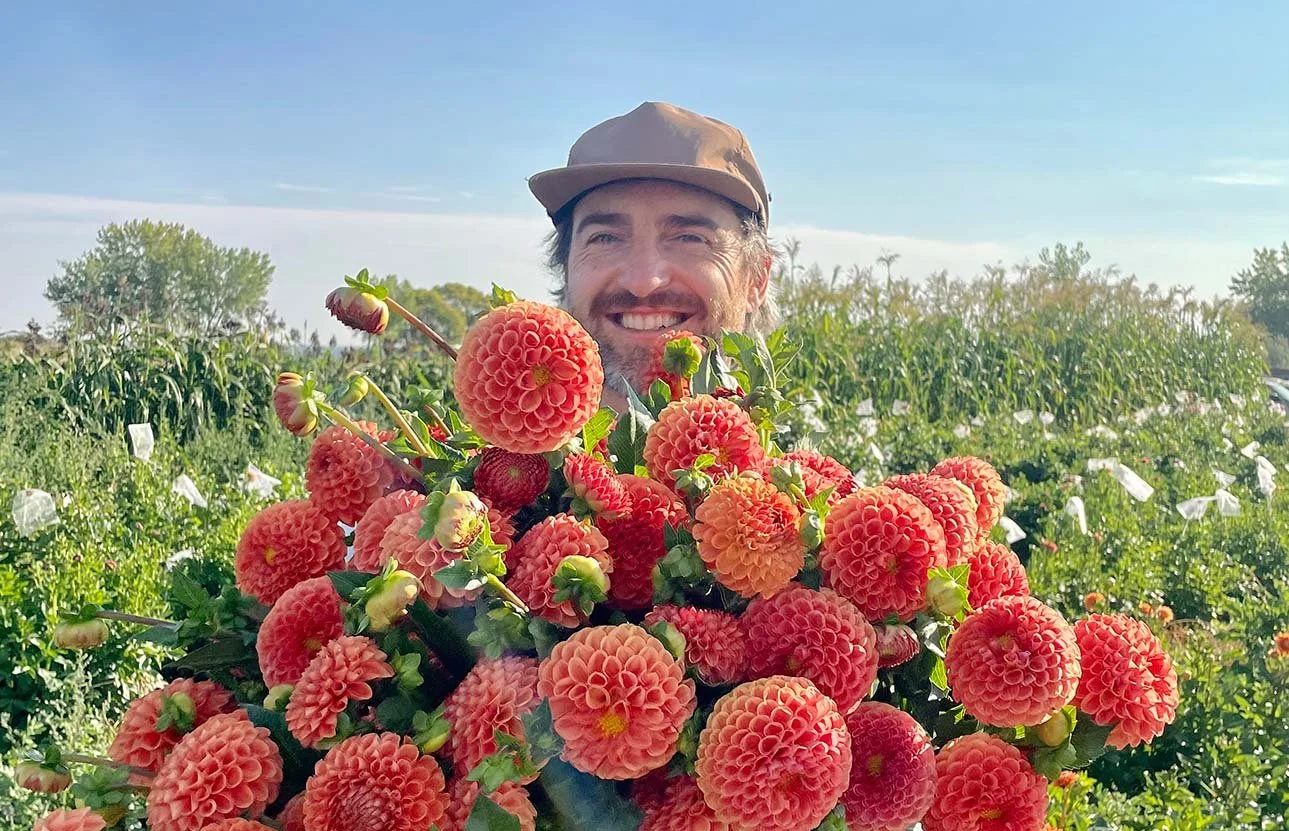
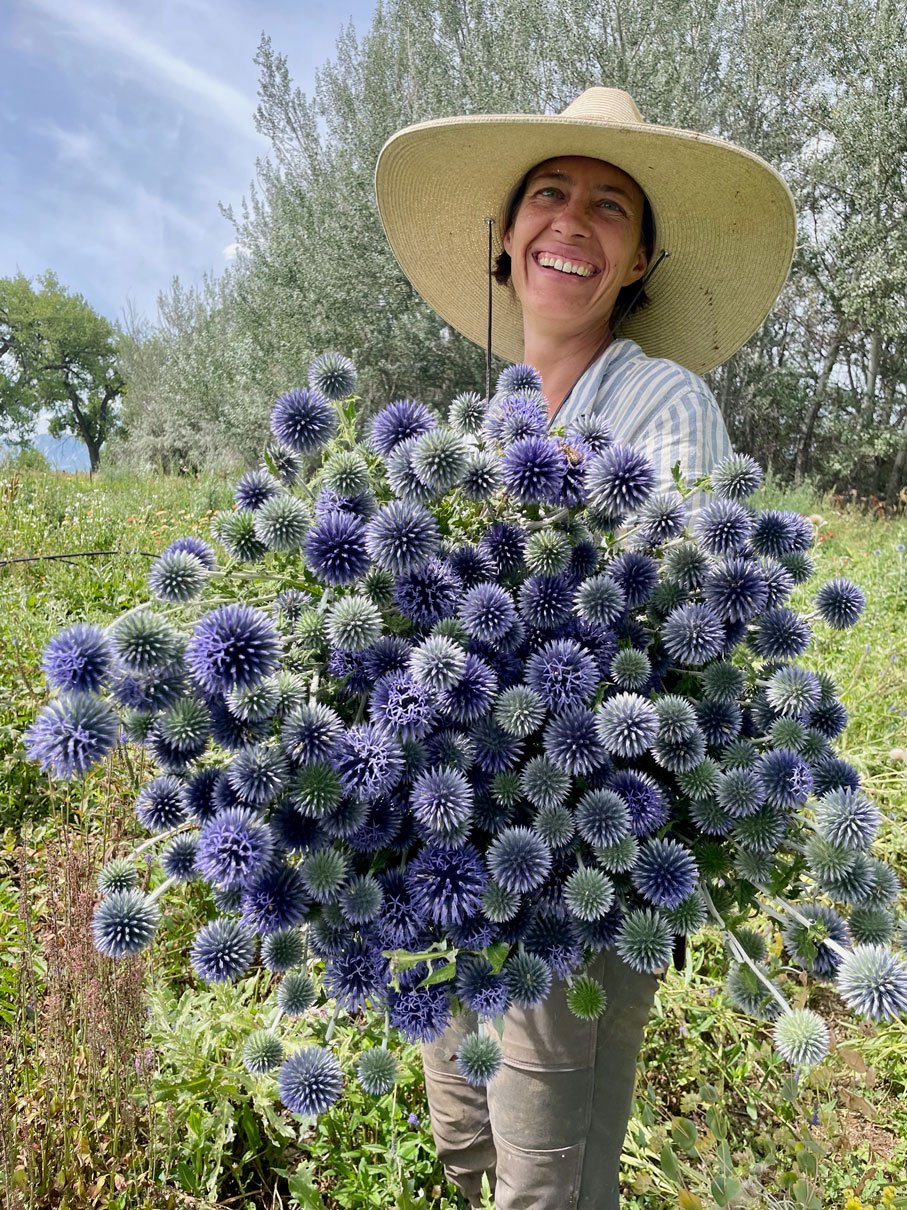
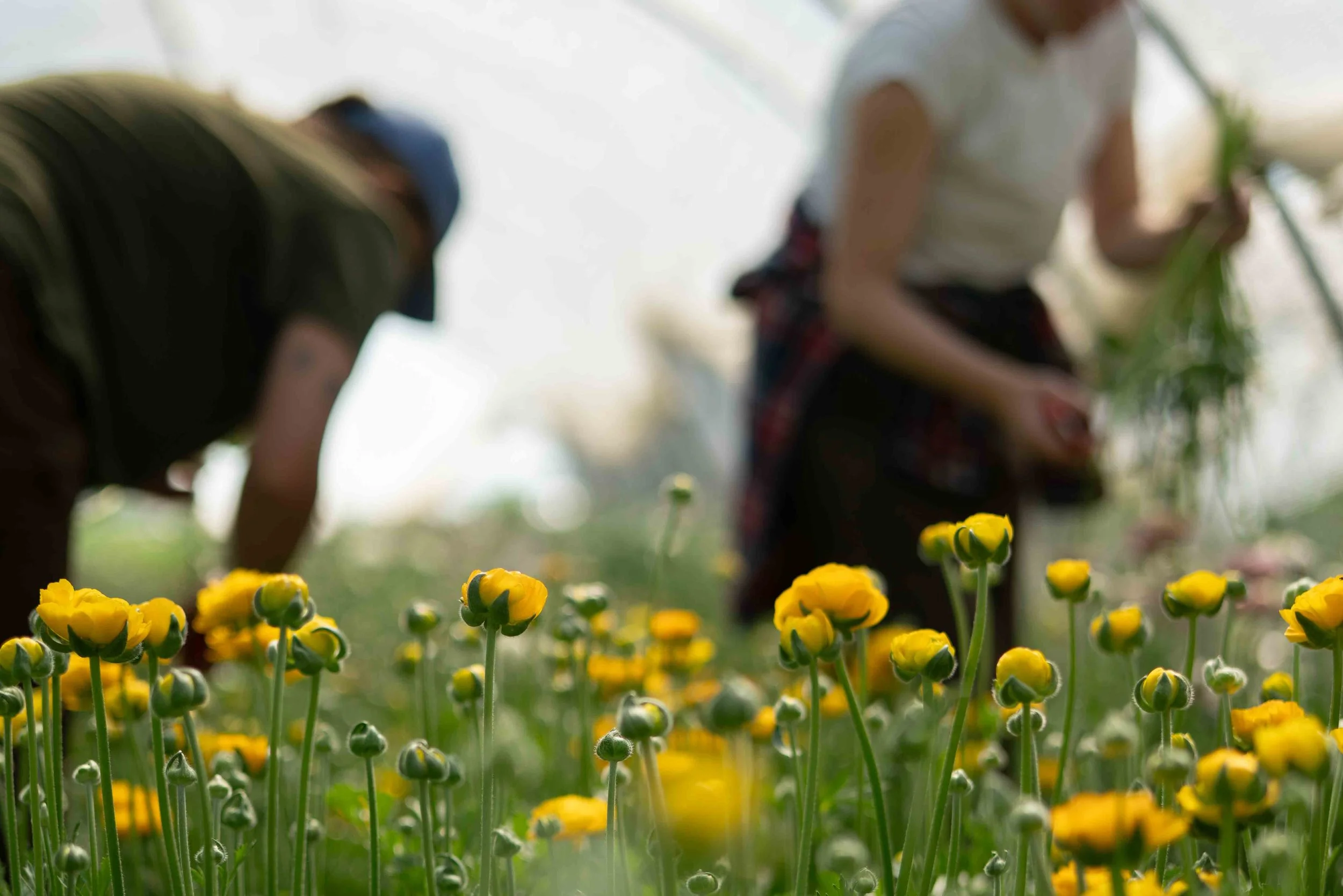
I think I’d like to see our crop mix going back to the 2024 top 10 — it’s kind of wild to me that we produced twice as many ranunculus in 2024 as 2025 — but in these numbers I can definitely see some of the weed and pest pressure showing up. It’s pretty cool that because of our diversity, we can quickly decide to let a crop go and turn our attention to getting the best out of the things that are actually doing well for us.
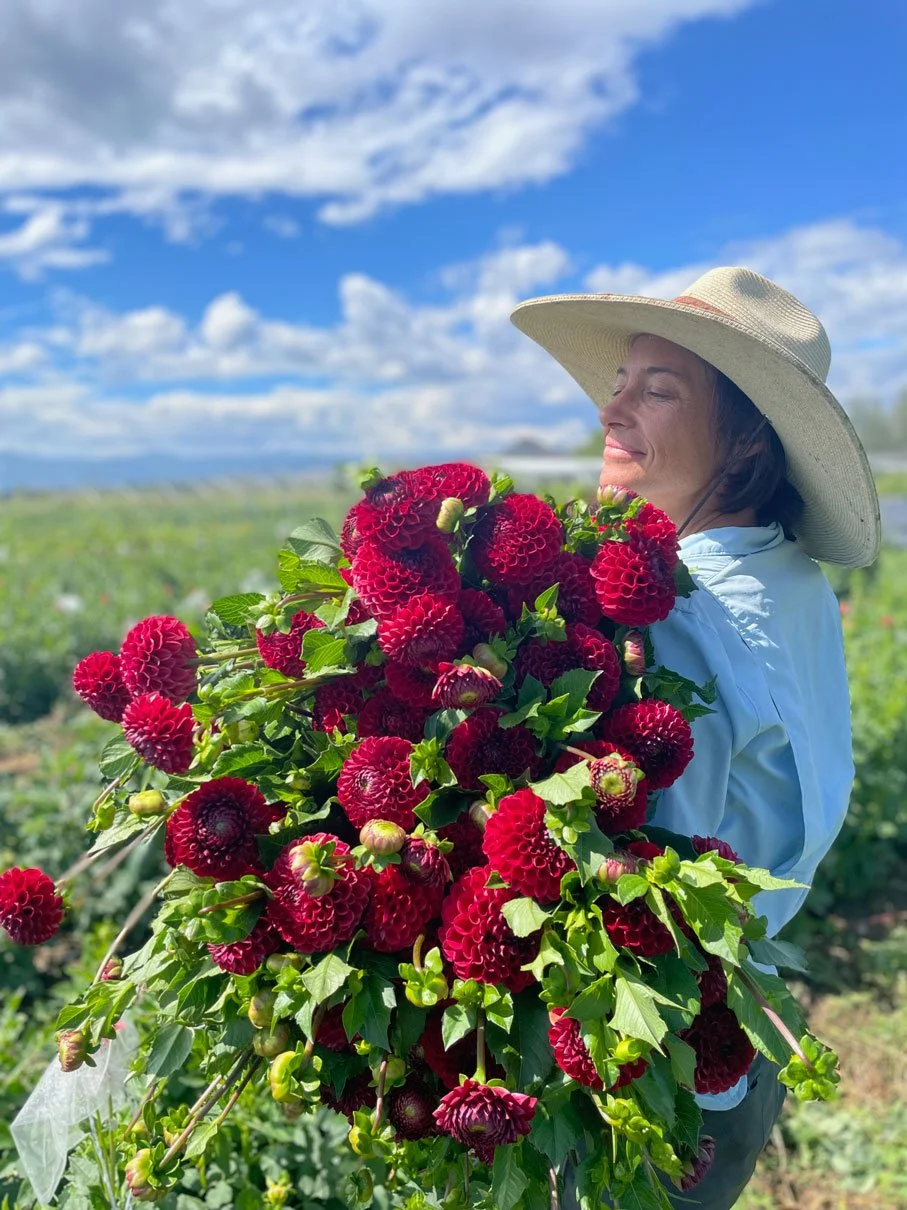
I’m very happy with the increase in our dahlia production. Even though we did compost a significant number of stems, we also sold a heck of a lot of dahlias, and they were happy and healthy plants this year. We planted about 3400 tubers, which meant that we harvested nearly 4 stems per plant, despite plenty of spots where tubers didn’t sprout, and quite a few trial varieties that we stopped harvesting because they didn’t work well as cuts or we didn’t like the color.
What We’re Loving and Leaving
When we look at our production numbers, it’s clear that some crops really pull their weight, and they’re the ones that we think of first when we name what we grow off the tops of our minds: ranunculus, lisianthus, peonies, dahlias, strawflower, snapdragons, sunflowers, tulips; the crops we’d never want to give up. And then there’s the other end of things, where we might be holding on too tight to a flower that has historical or sentimental importance, but isn’t helping us grow as a business. I’m sorry to say that sweet peas fell into this camp a few years ago.
Last year, we left behind:
annual baby’s breath
basil
bachelor’s buttons
dianthus
cape daisy
and this year we’ve decided to say goodbye to:
rudbeckias (except triloba)
purple majesty millet
ornamental kale
silene
stock
nicotiana
We’re just not able to produce these with enough quality or in enough quantity to be competitive in the market, or we’ve noticed over a few years that they are not selling in the wholesale market as we would like.That said, we are holding onto some crops that are weird and that set us apart, like Jewels of Opar, double gaillardia, sorghum, and monarda. We’re also adding in some things or scaling up some varieties that we know there’s a big demand for, like uniquely colored gladiolus and lilies, tissue-culture statice, and anything blue. I’m very tempted by the new curcuma (ornamental turmeric) varieties that are out there, and I’m also very skeptical of my ability to grow them! We’ll see what I decide this winter.
We’ve also decided to go big on some of our perennial plants. For years, I was just putting in small sections of perennials, sort of as trials, but they turned out to be great both in production and in the market, so we started putting in full beds of some and I’m really excited to see what happens next year. So far, we’ve planted full beds of:
delphinium
echinacea
echinops
eryngium
goldenrod
hypericum
lavender
trollius
veronica
yarrow
and we’ll be adding more things that I’m excited about, like hardy pampas grass, columbines, blackberries, and meadow rue, plus, I’m sure, more things that I don’t even know about yet. Something weird I came across recently that might need a trial is Dictamnus albus, or gasplant, which, besides being beautiful, apparently also emits a volatile flammable oil that can be set alight! Then again — maybe not a great idea in our fire-prone state? But it looks so pretty you guys! Toad lily and blackberry lily also sing me their siren songs, along with bush clematis, amsonia, and, well, pretty much anything I’ve never grown before. That’s the great thing about flowers: there’s infinite growing and learning to do.
Sales Outlets
This year, we focused on outlets that kept us on the farm and let us be with Margot more: pick-up only wedding arrangements, floral design and flower gardening workshops, wholesale, and the farm stand. We did attend 3 dates at the City Park Farmers Market, and we’re grateful that the market managers allowed us to do that. With our new, big van, we were able to bring so many flowers to market that we earned more than half what we did attending 12 markets last season!
We have found that even though we’re not delivering wedding flowers, the floral design has become too time and resource-intensive for us, and so in 2026 we will offer just bulk buckets, rental vases, and DIY design kits for weddings and events. We’re excited about what this means for our DIY brides, and also for our wholesale and workshop customers. We’ll be putting a lot more energy into our plants, workshops, and farm stand, and we’ll leave the floral design to folks with more time on their hands.
Comic Relief
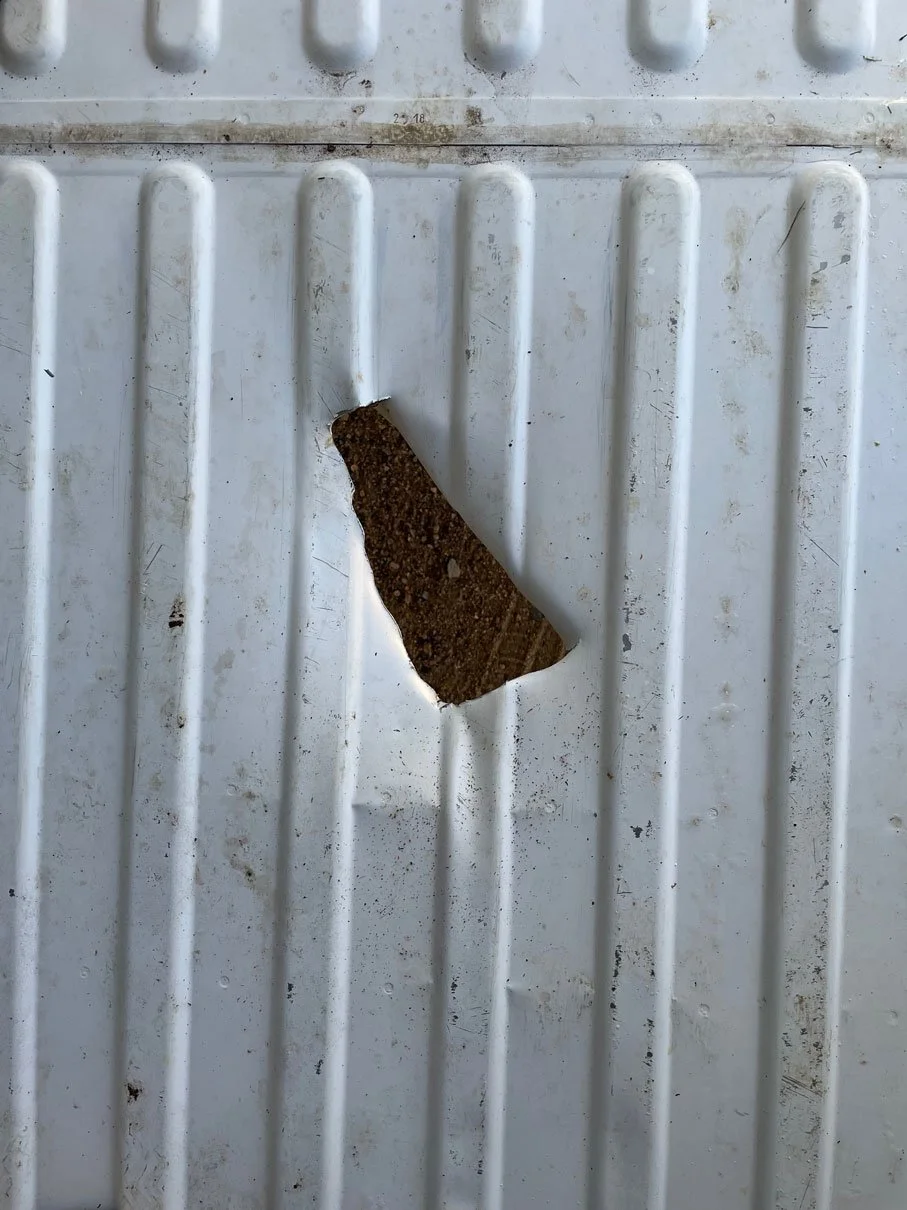
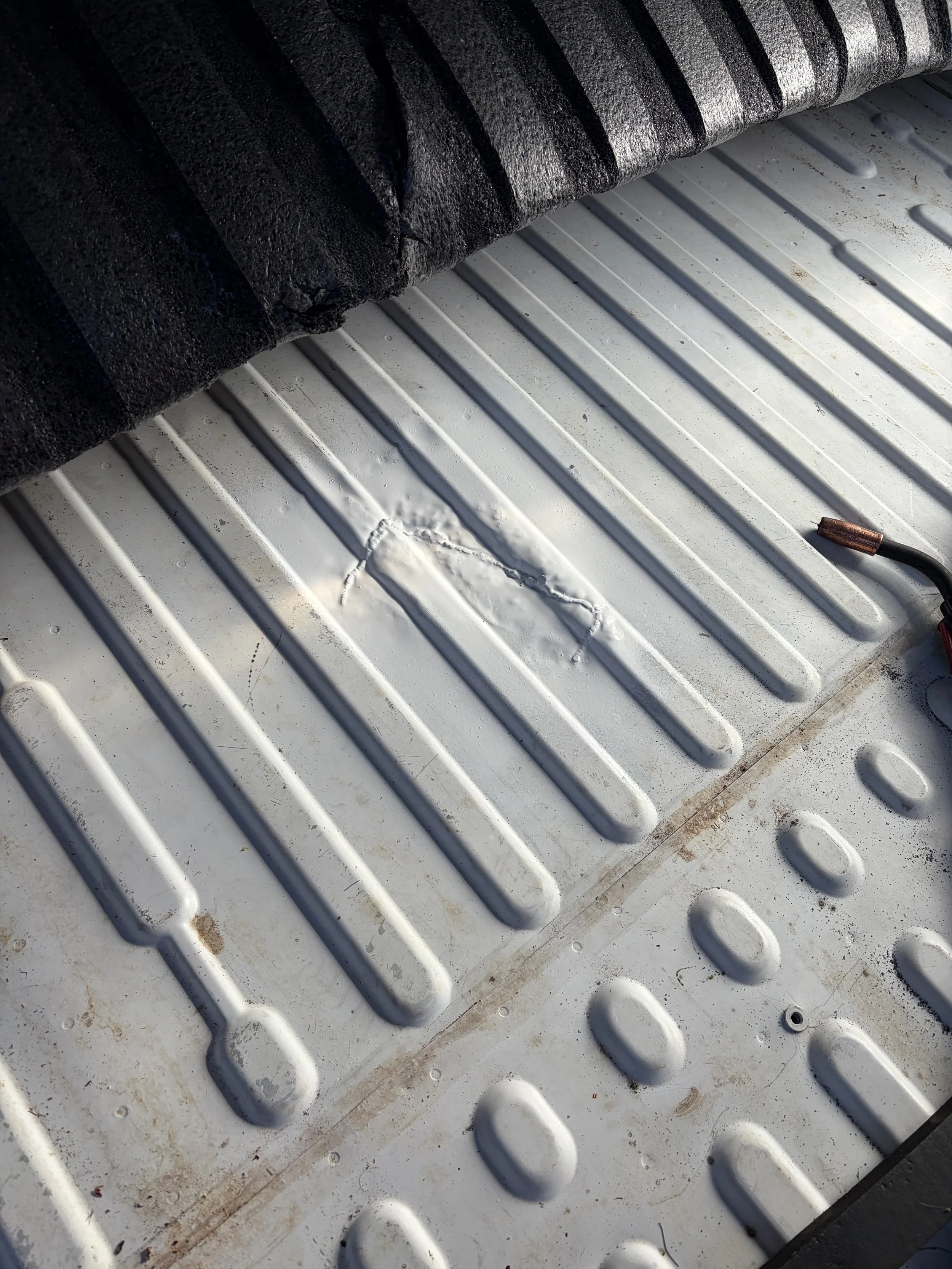
Speaking of that new van…time for some comic relief! Let me start us off with my biggest screw up of the season, when I was transporting a borrowed piece of tractor equipment in the van, I failed to secure it properly. This particular piece of equipment was a subsoiler that weighed almost 700 lbs, so when it fell over, it punctured a hole right through the floor, OH MY GOD. It took the strength of (as it turned out) one man, the very strong Kyle of Off-Beet Farm, to pick it up out of the floor. I’m sure he regrets letting me borrow his implement! Eventually we got the thing fixed by a great mobile welding company for not very much money in the scheme of things, but what a dumb mistake EEK!
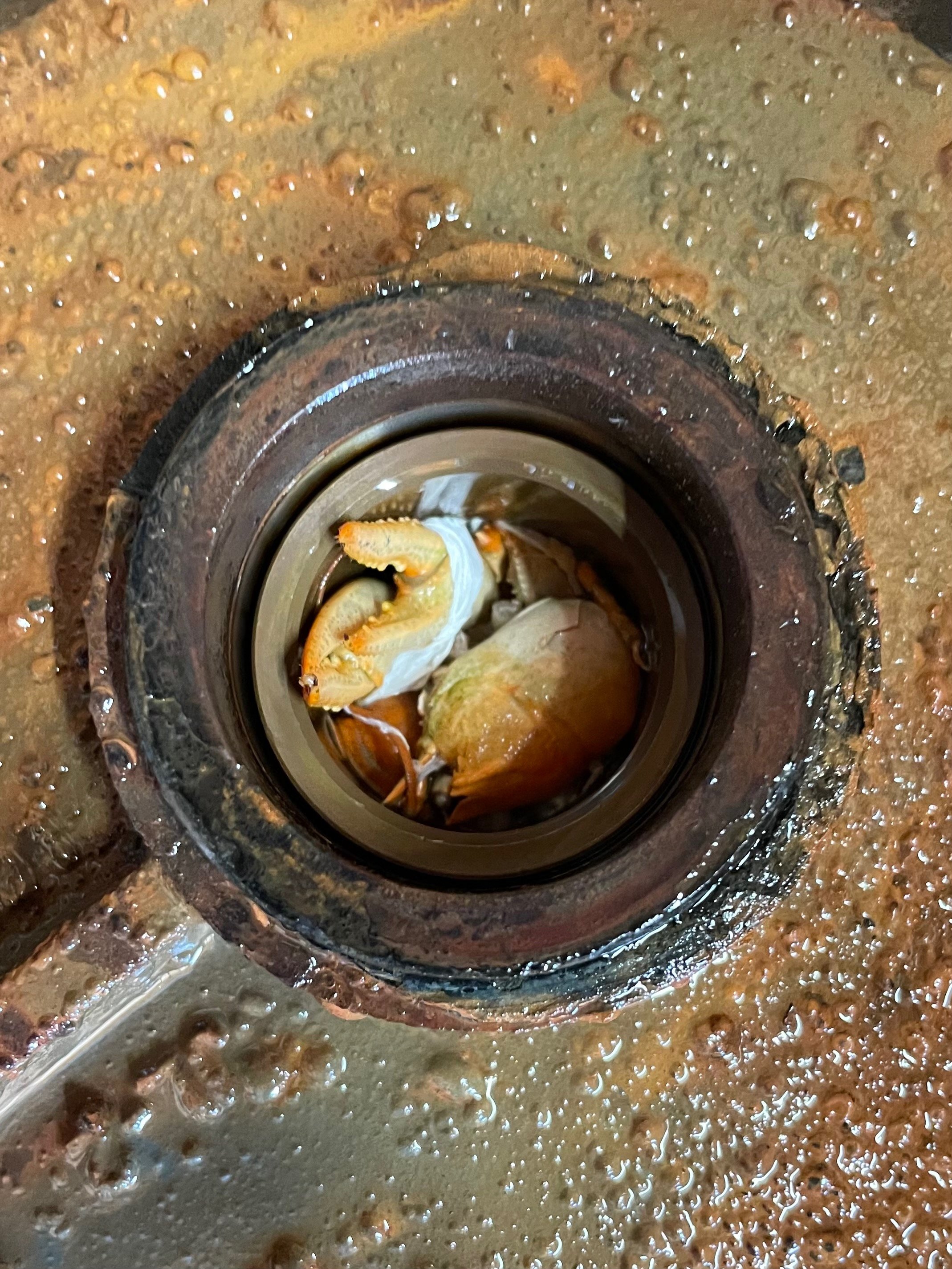
In the spring, our irrigation pump randomly stopped sucking water, and after doing hours of work to fix it, our wonderful irrigation guy Manuel eventually found a crayfish stuck inside the intake port. At least it was an easy fix!
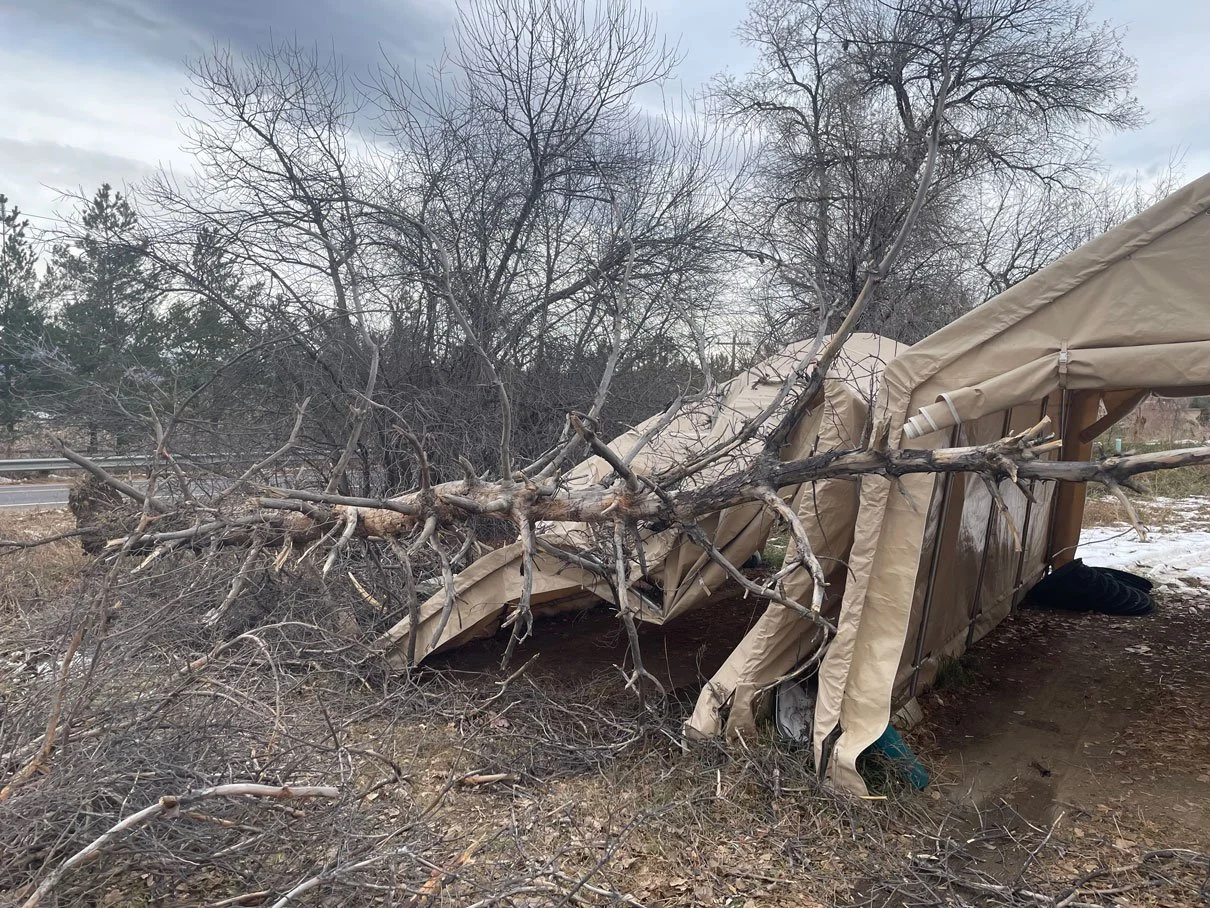
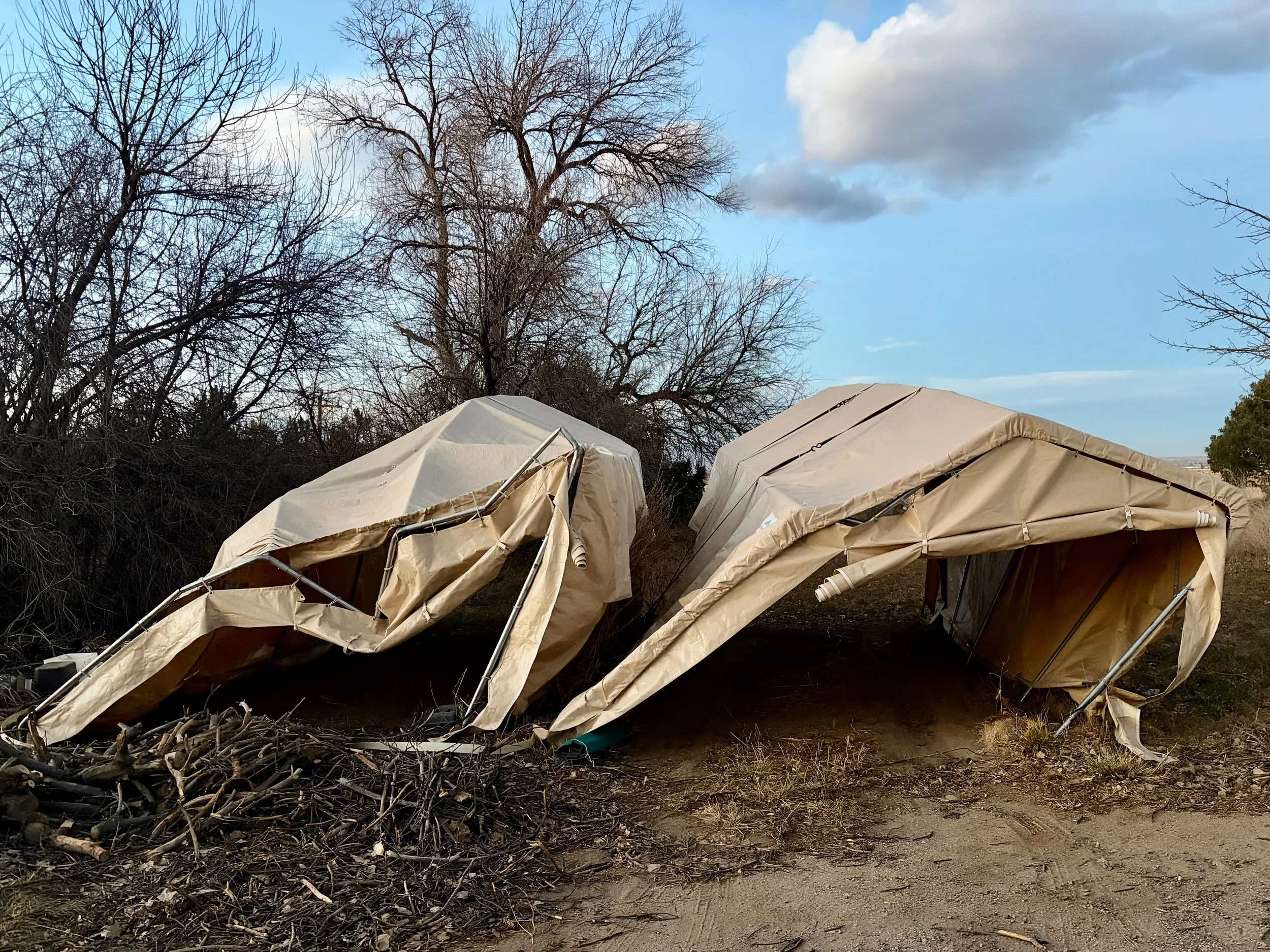
While this isn’t really that funny, you gotta laugh. The windstorms this fall have been brutal, not just on our structures but because of the dryness they bring to our already parched ecosystem. With the wind and no snow or rain to speak of, we’ve been having to water our perennials and bulbs through the winter, which just makes it harder and harder to farm. In one storm, an old dead tree finally bit the dust and crushed one carport, though I’m happy that the car inside was only slightly scathed. After that, a second storm came through blowing steady 70+mph winds for 2-3 days and just wore the other carport down. They remind me of a couple sad sailors after months at sea.
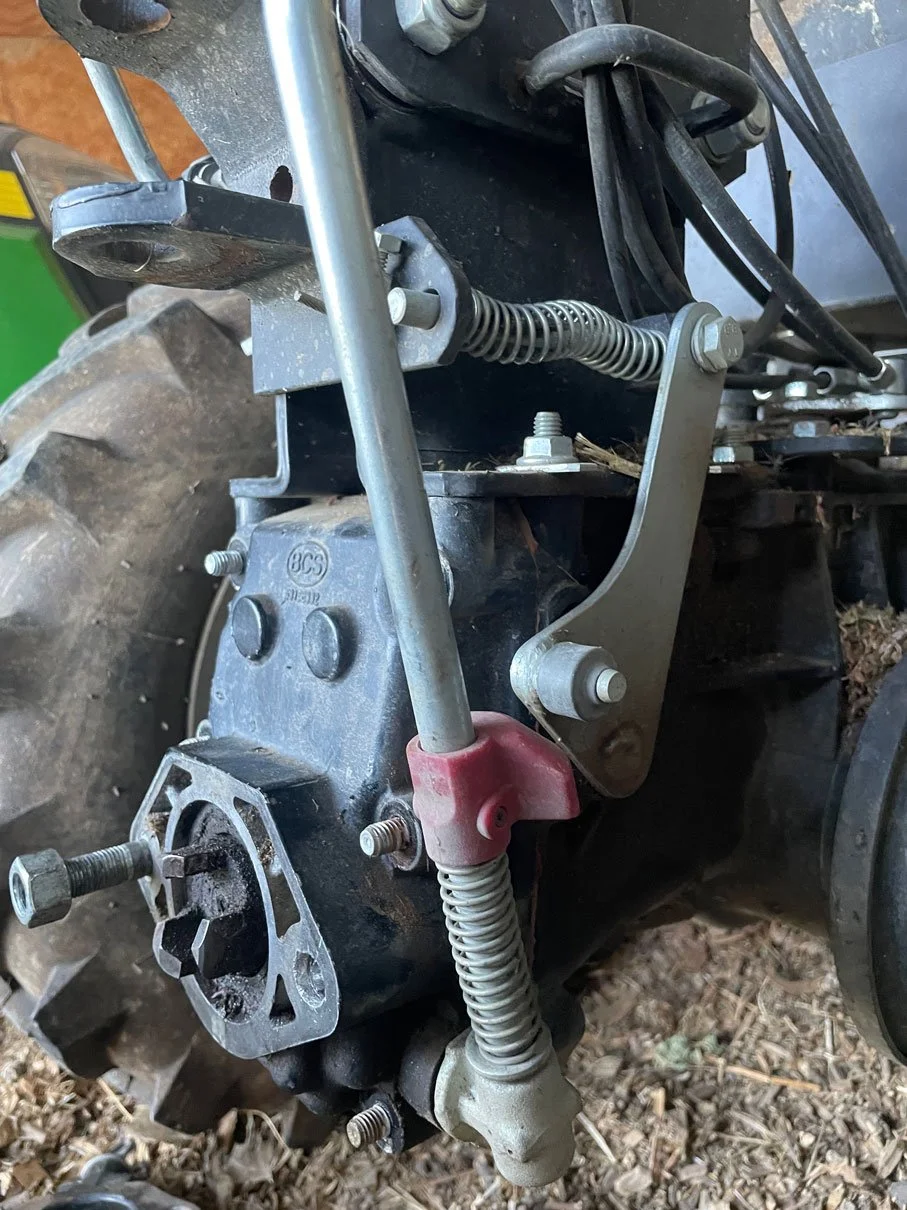
We also had the PTO stud on our BCS shear off, which Nelson diligently tried to repair with an extraction kit, but he ended up breaking off the drill bit, too. The repair shop is still waiting on parts, months later. Moral: Always tighten your bolts!
Educational Opportunities
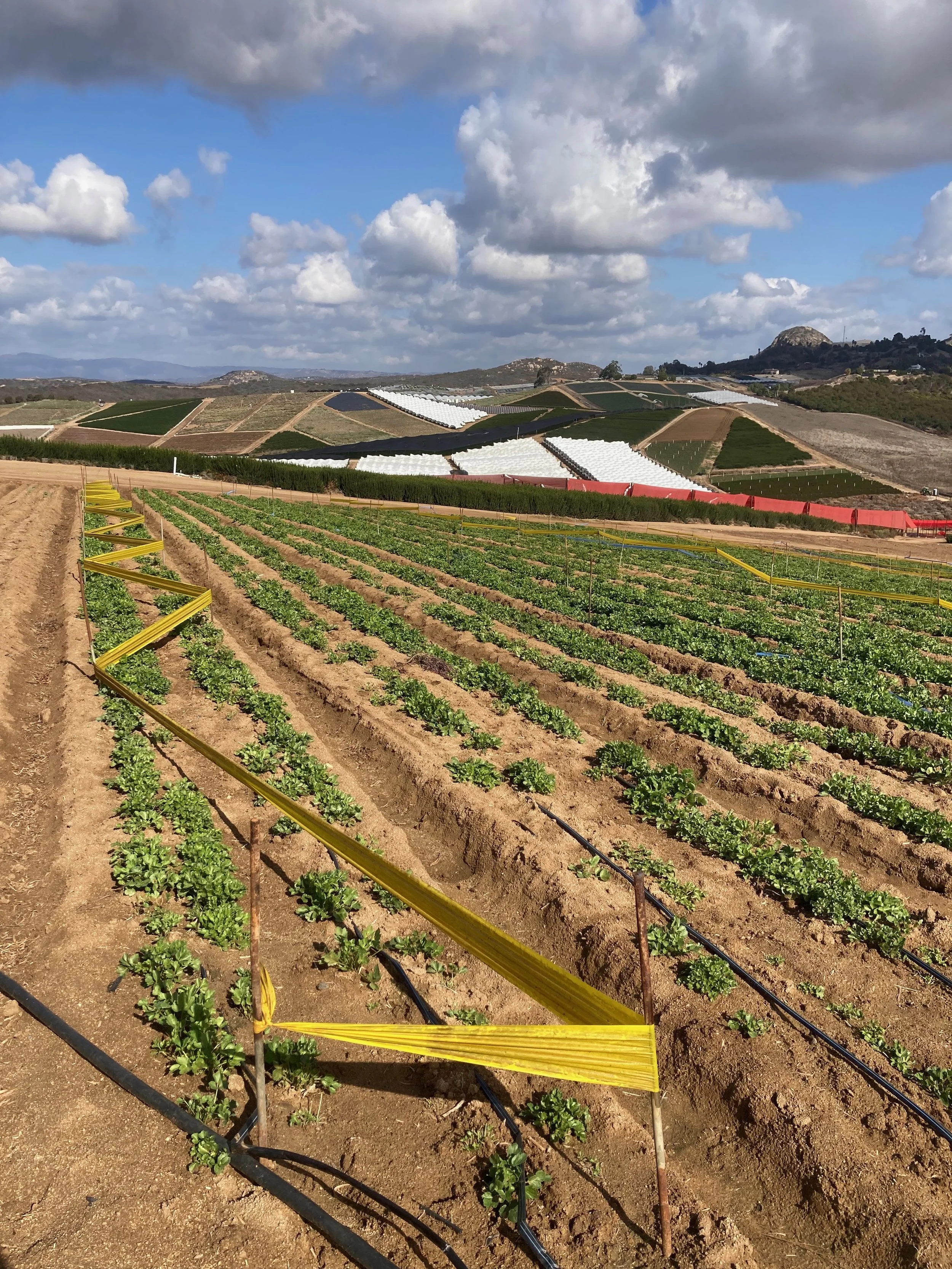
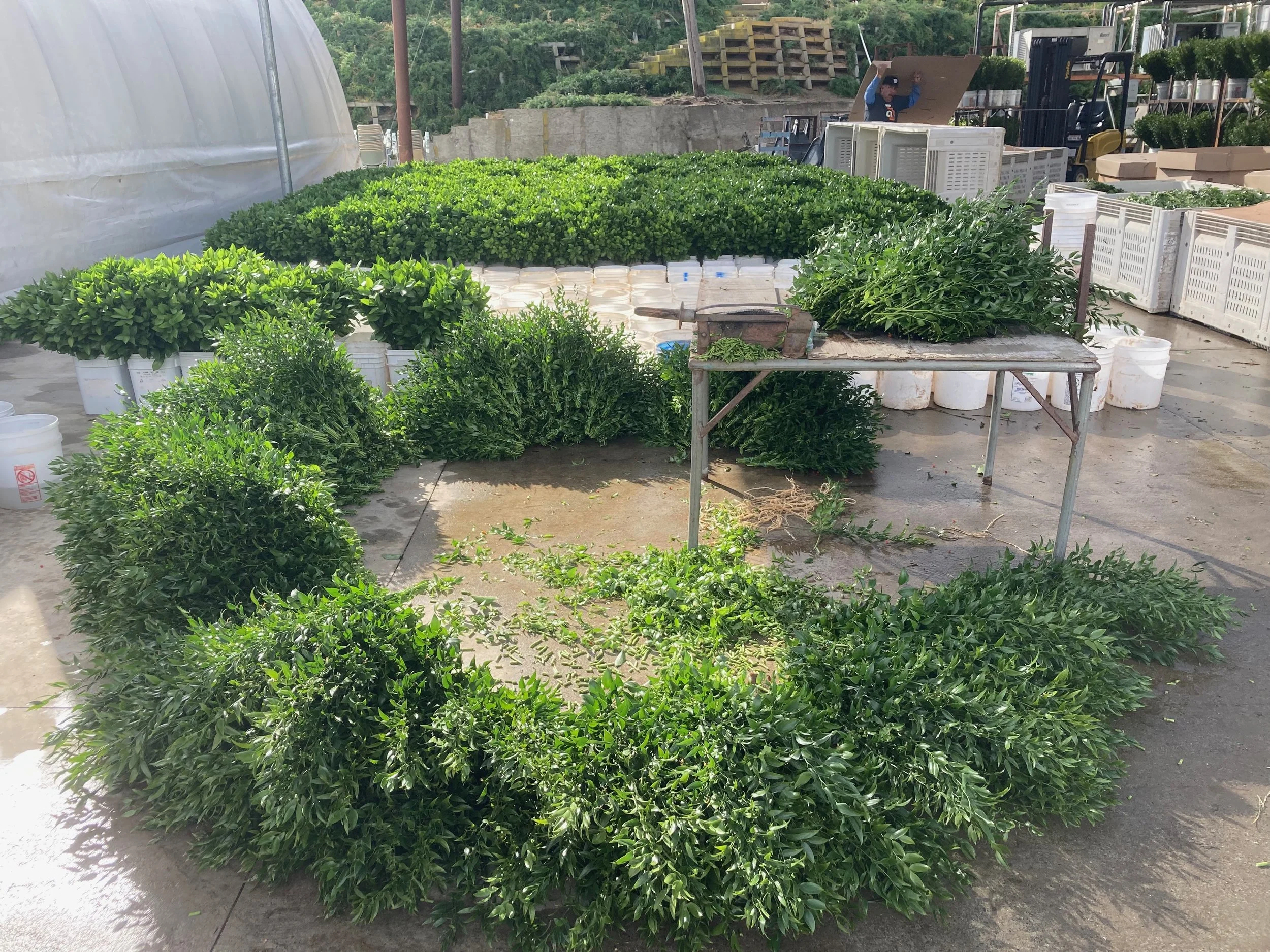
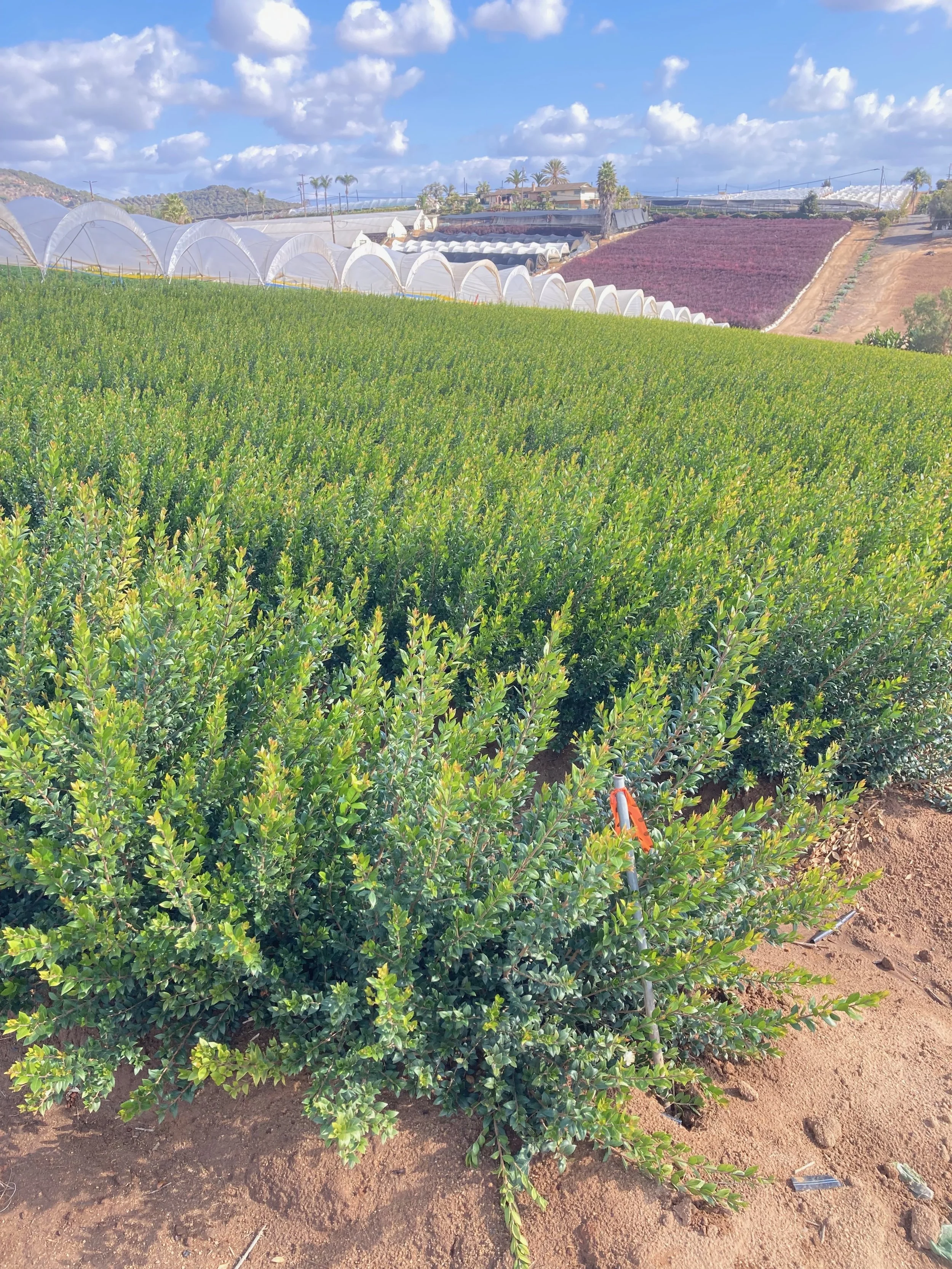
Serving on the board of the Association of Specialty Cut Flower Growers (ASCFG) has been eye-opening and so much fun. One of the cool things we got to do this year in January, was to tour Mellano & Co’s 300-acre flower farm near San Diego, CA during our spring board meeting. Yes, three hundred acres. It was fascinating to see what generational wealth and knowledge can do for a business, and the systems that have to be in place for growing on that scale. All of us were fascinated by the PVC frame that filled something like 20 buckets simultaneously, with the matching rolling rack of 2 levels that then was loaded onto a trailer for harvest, then rolled off and into cold storage, eliminating tons of time, lifting, and handling of material. There were literal acres of agonis, myrtle, piles and towers of italian ruscus and other greens, hundreds of hoop houses with succulents, alstroemeria, and more, and just a generally overwhelming industry happening all at once. I’d kill for the kind of greenery they were producing. That was my first time away from Margot, but it wasn’t a big deal at the time.
In December, I took the chance to attend Lennie Larkin and Ellen Polishuk’s Flower Farming Mastermind, a gathering of 16 flower farmers in one room for 3 days. It was intense! It was wonderful and mentally exhausting. I think we all came away feeling more confident about our businesses, if only because we were able to offer so much to the other participants. I have so many valuable tips, advice, and inspiration to act upon now, and I’m following 15 new friends in their business journeys, and I feel like I’m in a pretty cool club. This trip was much harder for me to be OK with leaving Margot for, just because of how dependent she’s become on me for getting to sleep, and how much more aware she is of my absence. It turned out fine, but it wasn’t a fun time for Nelson.
Next week, I’m looking forward to the ASCFG conference in Albuquerque! There are so many awesome panelists and so much networking and learning to be done. Again, leaving the baby right now feels pretty awful, but we can’t justify the expense of bringing her and Nelson with me, or having no one at the farm for even those 3 days.
TV, Video and Podcast Appearances
We had a really robust year in the press! I think this has less to do with us being experts, or a big important farm, and more to do with us just saying ‘yes’ to being interviewed. We had 2 spots on Denver7, one about a Boulder County mobile farm stand rule, and one about the funding we received through the Flatirons Farmers Coalition Farming Families Fund (thank you so much!!). MadAgriculture created a film about us and Speedwell Farm & Gardens to highlight their Regenerative Catalyst Fund, which we received to help us with cover cropping.
I think our favorite video from the year was this beautiful piece put together by City Park Farmers Market and Nick Kupin. Sometimes you surprise yourself with what you have to say, and this was one of those interviews; I remember being SO tired that day, so sleep deprived with the baby, and it still turned out OK. I still had passion for farming and flowers to express, despite it all. Margo Wanberg, founder of CPFM, is also a good friend and mother of 3 who wrote this article about Artemis, motherhood, and farming that still makes me cry. Just one example: “Tending to the land and to the humans we raise is a sacred and often exhausting act of surrender.”
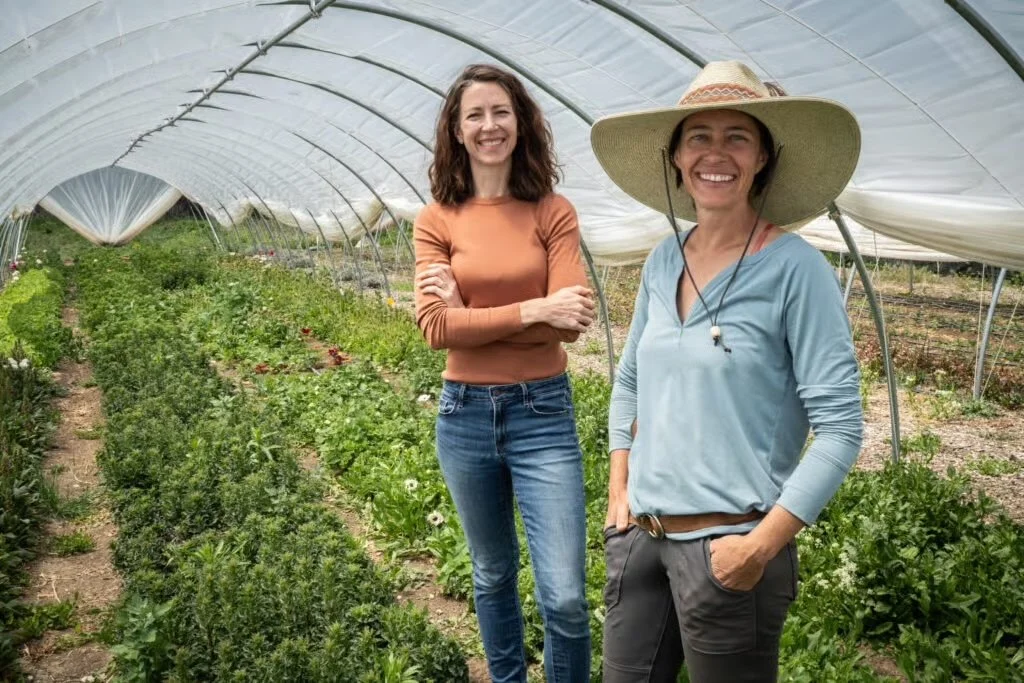
Stefanie & Helen on the farm. Click through to our radio spot on Colorado Matters.
In the audio realm, I got to speak with Jennifer Gulizia on her podcast “The Backyard Bouquet” which was a really fun experience and I was happy to see a few other Colorado farmers on her show! I was also a mentor for a group of students in Colorado State University’s Agricultural and Resource Economics program, and their final semester project was a podcast —unfortunately, it’s a video podcast haha so you’ll have to look at my weird facial expressions and listen to a lot of ‘ums’ and ‘you knows’, but it was a fun experience and they were great to get to know.
One of the press highlights for the year was getting to meet Ryan Warner of Colorado Public Radio’s show Colorado Matters. We met with him and Stefanie Hofmeister, who runs the Colorado Flower Collective, on the farm to talk about Mother’s Day, local flowers, and how Stefanie’s business changes the game for florists, farmers, and flower lovers. Ryan was so much fun to talk to and he seems to work incredibly hard. We were thrilled to be on the radio with him!
To Sum It All Up
Woof, it was a tough one. It continues to be tough. Climate change, politics, the baby, the weeds — it’s all so much. So much more than too much. I question a lot whether our life is worth the pain and sweat and stress of running our own land-based business in a very challenging climate. Right now, I’m still saying yes, and hoping that things might maybe get easier in a few years. The flowers are magic, and parenthood is magic, and both of them are the hardest jobs in the entire world.